
Collarbone tattoos can be a small accent near the shoulder or a longer design that follows the upper chest. The placement is visible with some necklines and easy to cover with others, so the choice can feel personal as well as visual. This guide shares 25 collarbone tattoo ideas, from vines and stars to birds, florals, and bolder paired designs.
Use each image as a starting reference. Your artist can redraw it for your body, adjust the line weight, and decide where the design should begin and end. Before you choose a motif, compare the shape you like with the space you want to fill.
25 Collarbone Tattoo Ideas
For a useful comparison, look at each idea as a composition: where it sits, which direction it faces, and how much open space remains around it. The first gallery idea and its image have been moved to the end; the other pairs stay in their original order.
Serpent Line
A slender snake follows the collarbone in one continuous curve, echoing the line of a necklace. The simple outline gives the body shape room to lead the design, while the restrained detail keeps the serpent easy to notice without making the area feel crowded.
Decide whether the head should point toward the center of the chest or toward the shoulder. Ask your artist to draw the curve on your body instead of relying on a flat reference; small changes in the starting point can make the line feel more balanced with your neckline.

Quiet Vine
A light vine runs across the collarbone, with small leaves tapering toward the shoulder. The open spacing gives the design a natural, airy look and allows each leaf to stay distinct rather than forming a solid band of ink.
You can keep the vine on one side for an asymmetrical look or mirror a shorter branch on the other. Bring a few leaf shapes you like, then ask the artist to vary the spacing so the branch follows your own shoulder line.

Lavender Fall
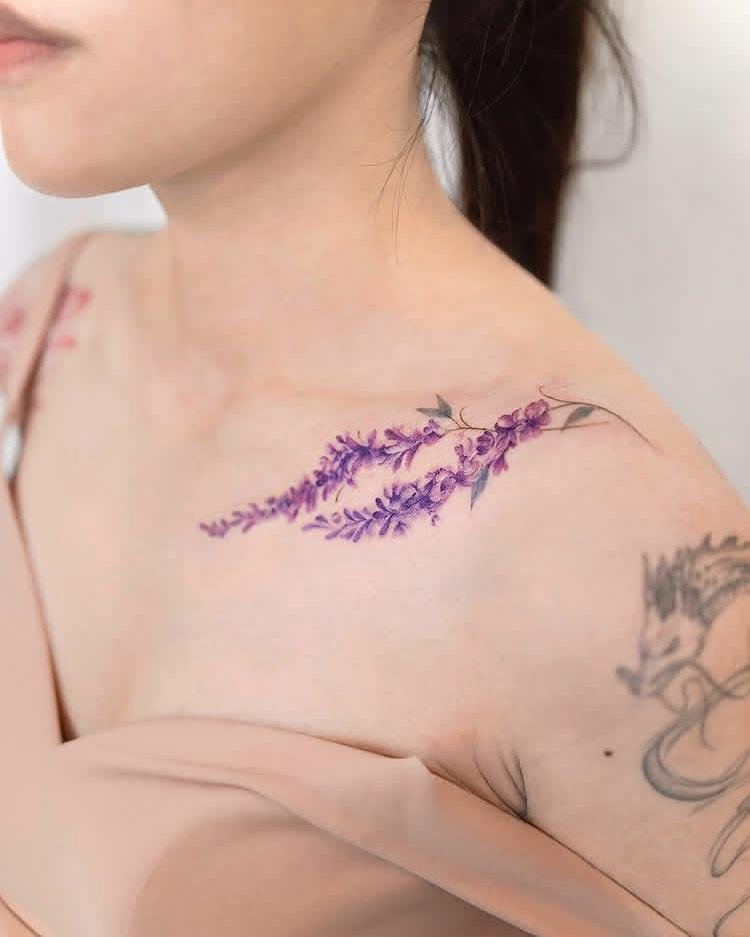
A lavender sprig rests across the collarbone, with a soft color treatment that makes the stem feel lighter than a bold black outline. The long, narrow form suits the horizontal area and can be scaled from a short accent to a longer botanical piece.
Color can look different across screens and skin tones, so ask the artist to show healed examples of similar work. Decide whether the design should stay mostly linework or use colored petals, and avoid adding tiny leaves if the final tattoo will be very small.
Butterfly Trail
Three small butterflies travel along the collarbone with open space between each one. Their different positions suggest movement without needing a long background or extra decorative marks. The repeated motif creates a tidy rhythm across the skin.
Choose whether the butterflies should be the same size or gradually grow toward the shoulder. A stencil can help you decide the distance between them and whether they should all face the same direction. Keep the wing details as simple as the scale requires.

Ember Bloom
Two loose floral bursts in deep red sit at slightly different points across the collarbone. The asymmetry keeps the design from feeling like a formal necklace, while the color gives the flowers more presence than a simple outline.
Ask the artist to show how the red looks in healed work and to explain which details will remain clear at your chosen size. You can keep the blooms separated, connect them with a fine stem, or leave open skin between them for a lighter finish.

Little Flock
A trio of small birds appears in flight above a fine trailing line. The open silhouettes make the idea readable without needing detailed feathers, while the curved path gives the birds a sense of direction across the upper chest.
Decide whether the birds should rise toward the shoulder or travel toward the center. Ask for a stencil preview while you are standing, then check how the spacing looks with your usual necklace and shirt neckline.

Wishes Adrift
A dandelion releases a few drifting seeds above a short script phrase. The flower and lettering share one vertical flow, creating a design that mixes a recognizable plant with a personal message.
If you keep the words, confirm the exact spelling and letter style before the stencil is applied. Make sure the dandelion head and seed lines have enough space to remain separate; shortening the phrase may help the full composition fit without shrinking every detail.

Dragon’s Reach
A fine-line dragon stretches along the collarbone, with its long body and tail using the available horizontal space. The creature’s shape can feel detailed without a large background because the silhouette carries the composition.
Choose the level of scale, claw, and face detail that fits the planned size. Ask the artist to place the head and tail first, then build the body between them. This helps avoid compressing the most recognizable parts into the narrowest area.

Spring Migration
A flowering branch curves over the shoulder while small blue swallows lift away from its blossoms. The birds create motion against the branch’s gentle arc, giving the design a seasonal feel without needing a full landscape.
Decide which element should lead: the branch, the blossoms, or the birds. The collarbone-to-shoulder transition can make the composition feel continuous, but ask your artist to check the curve from the front and side before choosing the final angle.

Blossom Drift
A flowering cherry branch bends across the shoulder, with petals and a few small marks falling below it. The loose arrangement feels less formal than a straight floral band and lets the branch follow the body’s natural direction.
A branch can be shortened or turned to fit one side of the collarbone. Ask the artist to keep the blossom clusters distinct and to place any falling-petal details where they will not compete with the main stem.

Twin Branches
Two plum blossom branches mirror each other across the collarbone, using dark stems and red petals to create a clear central balance. The paired arrangement makes a wider design while still leaving open space between the branches.
Perfect symmetry is not required for a balanced look. Have the artist place both sides together and check where they meet or turn away from the center. This is especially useful if you want each branch to sit comfortably with the way your shoulders naturally rest.

Sheer Wing
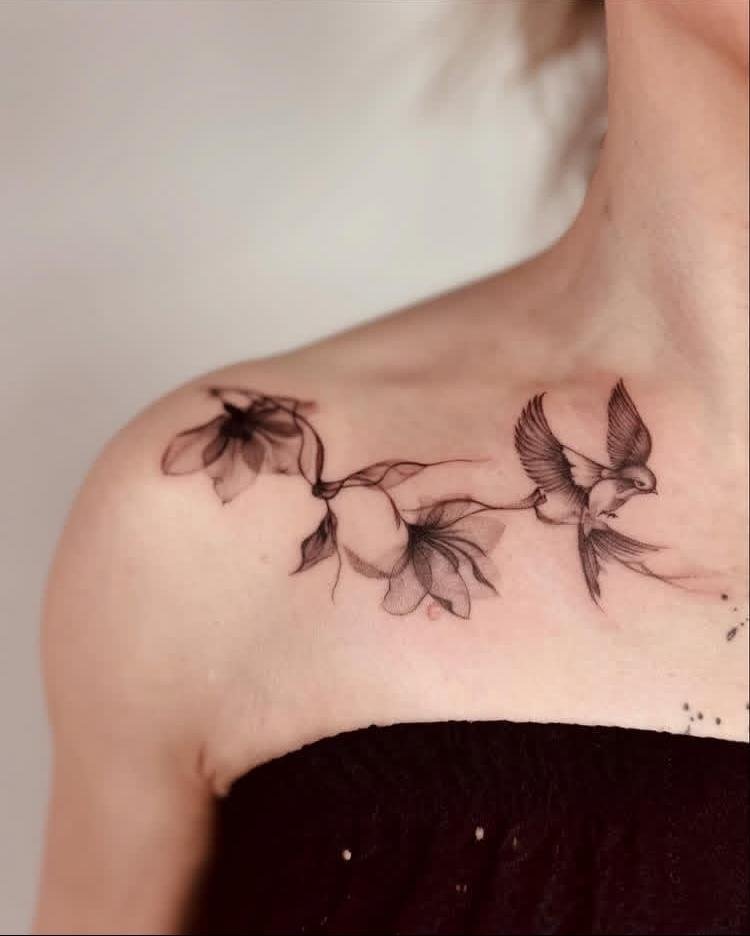
A light floral shape transitions into a swallow, making the two elements feel like one continuous movement. The fine outlines keep the composition delicate, while the bird gives the trailing bloom a clear destination.
Ask the artist to identify the main outline before adding small texture. At a modest size, fewer lines can make the bird and flower easier to distinguish. You can also shift the bird toward the shoulder if you want the design to feel as though it is moving outward.
Little Sea Dragon
A small blue sea creature winds across the collarbone with rounded features and soft color. Its playful shape brings a lighter mood than traditional floral or celestial references, showing that a collarbone piece can be whimsical as well as delicate.
Colorful characters need a clear outline so the shape does not disappear into the surrounding details. Ask your artist to adapt the face, fins, and tail to the size you want, and choose a placement where the whole creature can curve without being cut off by the shoulder.

Fading Rose
A single rose droops along the collarbone, with dark ink-wash petals touched by red at their tips. The angled stem creates a quiet, downward movement, giving the flower a moodier look than a centered rosebud.
Decide how much color you want before the design is finalized. Ask the artist to show the contrast between the dark petals and red accents in healed examples, then check whether the stem should follow the collarbone or angle toward the chest.

Dagger Pair
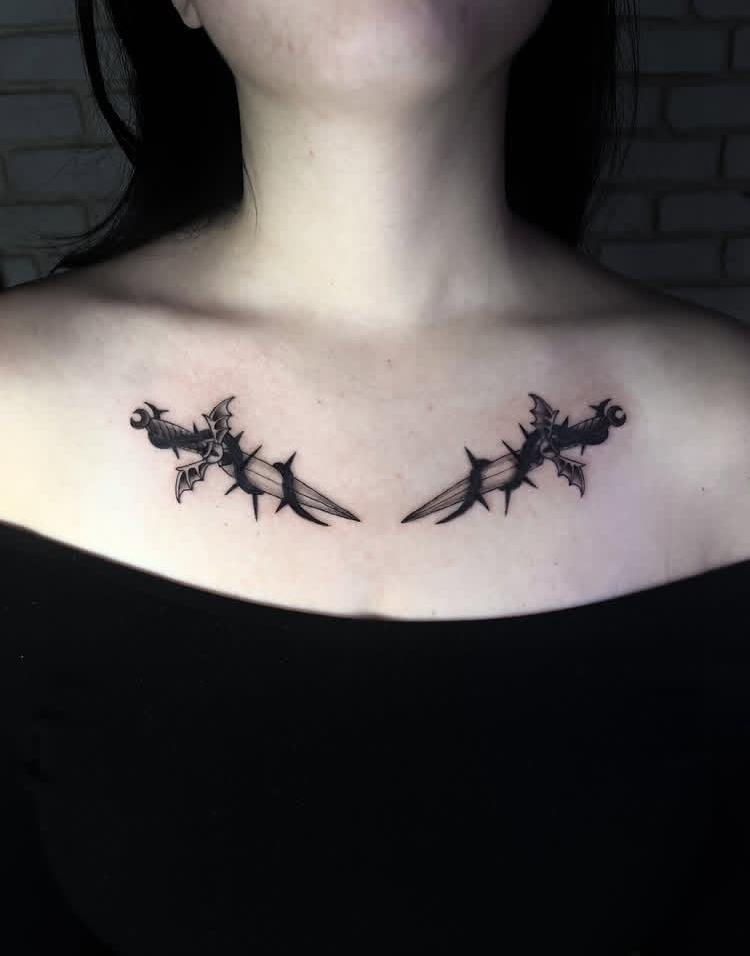
Two daggers mirror each other across the collarbone, their points turned inward and ornamental hilts adding detail. The sharp lines create a bold alternative to softer botanical references while retaining a symmetrical layout.
Check the angle of each blade from the front before approving the stencil. Ask your artist to simplify the hilt if the design needs to be smaller, and decide how close the points should sit to the center so the pair feels connected rather than crowded.
Gothic Garland
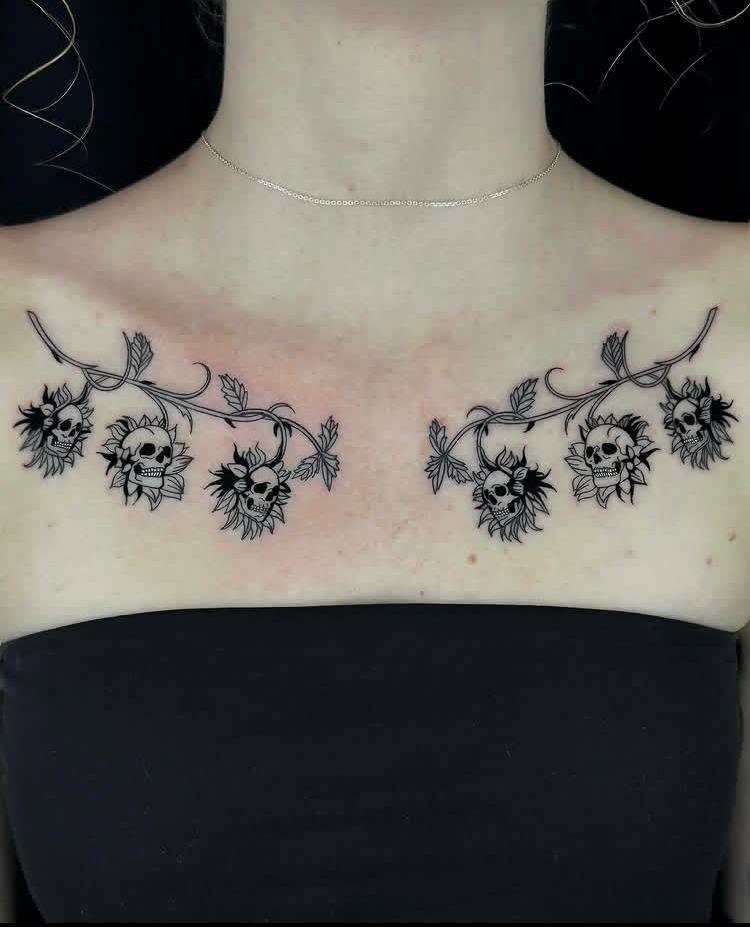
Dark roses and small skulls form a pair of garlands that sweep along the collarbones. Botanical shapes soften the skull details, creating a gothic design with a strong outline and a clear left-to-right flow.
This idea needs enough space for the flowers and skulls to remain separate. Ask the artist to map the two sides as one composition, then review how the garlands meet at the center and where they end near each shoulder.
Hummingbird Duo
Two hummingbirds face one another near the shoulder and upper chest, with their wings shown mid-flight. The paired birds create a focal point without relying on lettering, and small color details can make each one feel distinct.
Confirm the exact placement with a stencil because the reference crosses the shoulder area. Ask the artist to keep the beaks, wings, and body shapes readable at the intended size, then choose whether the birds should mirror each other or have slightly different poses.

Autumn Wreath
Two clusters of maple leaves sit on either side of the collarbone in red and orange tones. The mirrored groups frame the center of the chest, while the seasonal color gives the composition a warmer feel than a plain black outline.
You can use leaves from a season or place that matters to you, or choose shapes simply for their color and form. Ask the artist to test the leaf cluster size against your neckline and to keep the two sides balanced without forcing them to be identical.

Scattered Sparkle
Fine stars of different sizes spread across the upper chest, with one larger point giving the pattern a focal center. The loose arrangement feels curated instead of like a uniform row, and it can remain mostly black linework.
If you want a constellation, use its actual star pattern as a reference. If the stars are decorative, choose a small set of shapes and let the artist vary their spacing. A stencil makes it easier to see whether the largest star sits where you want it.

Cosmic Symmetry
Small planets sit on one side while moon phases line the other, creating a miniature sky across the collarbone. Dots and tiny circles tie the two halves together, so the different motifs feel like one coordinated design.
Choose a short list of planets and phases rather than trying to fit the whole solar system into a narrow space. Ask the artist to distinguish the central shapes with size or line weight, and check whether the pattern still reads clearly from a few feet away.

Candy Constellation
Tiny stars, moons, and blossoms in soft pink and violet scatter over both shoulders. The pastel palette makes the marks feel playful, while the scattered layout avoids creating a solid band across the skin.
Color can be subtle at a very small scale, so review examples on skin similar to yours and ask the artist how to keep each symbol distinct. You might choose two colors and repeat them, rather than adding a new shade to every small mark.

Storm Bats
Black bats spread across both shoulders, with lightning bolts adding a sharp accent on one side. The strong silhouettes make this design bolder than the small star and flower ideas, while the uneven detail breaks the mirror-like layout.
Decide whether you want the lightning to remain one-sided or repeat it on both sides. Ask the artist to check how far the wings extend toward the neck and upper arm so the bats feel connected to the collarbone placement rather than floating away from it.

Trinket Trail
A diagonal line of small symbols—such as stars, a heart, and a moon—travels across the shoulder in alternating pink and blue. Repeating the colors creates a loose rhythm, making the collection feel planned instead of random.
Pick symbols with personal meaning or a visual shape you enjoy, then limit the number so each one has room. Ask the artist to map the path on your body and adjust the diagonal until it fits the neckline and shoulder curve.

Laurel Frame
A laurel wreath stretches from shoulder to shoulder and meets at the center of the chest. Its broad curve makes a larger statement than a small standalone motif, while the branches frame rather than fill the space between the shoulders.
This design needs careful measuring and a clear stopping point near each shoulder. Ask for the full stencil before the session and check it with your arms relaxed. If you prefer a lighter version, shorten the branches or leave more open space between the leaves.

Celestial Drift
A fine sun with radiating lines anchors the design, while a crescent and small stars drift toward the shoulder. The uneven spacing gives it a relaxed sky-like feel instead of a perfectly centered emblem.
Choose whether the crescent should sit close to the sun or farther out toward the shoulder. Ask the artist to place the full composition on your body and check how it looks with a necklace or open neckline before you settle on the direction.

How to Choose a Collarbone Tattoo Placement
Many tattoo galleries show the motif but skip the exact location. The collarbone area offers several distinct options: a narrow line that traces the bone, a small symbol above or below it, a design that sits near the center of the chest, or an image that extends toward the shoulder. The same flower or phrase can look quite different in each zone.
Decide how much of the area to use
A single small symbol leaves plenty of open skin. A branch, script line, or garland needs more length. Decide whether the tattoo should stay on one side, cross the center, or turn toward the shoulder, then ask your artist to mark the endpoints before adding detail.
Check the design with your posture and clothes
Try the stencil while standing in a relaxed position, then view it with your arms down and slightly raised. Check how it pairs with necklaces, open collars, and tops you wear often. This makes it easier to spot a design that sits too close to a strap or disappears beneath a neckline you wanted to show it with.
Choose a focal point and keep spacing clear
For a horizontal piece, decide what should catch the eye first: the flower, lettering, bird, or central symbol. If several motifs share the same size and line weight, the design can feel busy. Ask the artist to vary scale or leave space between separate elements.
Review details before the session
Bring the original reference and explain what you want to keep. For script, verify every word. For a mirrored design, compare both sides on the stencil. For fine lines or color, look at healed examples from the artist, since a screen image cannot show how the work will look on your skin.
Think about safety and aftercare
Tattooing can carry risks, including infection from contaminated ink and allergic reactions. The FDA’s tattoo safety guidance explains what to consider before getting inked. Follow the studio’s aftercare instructions, and once the tattoo is healed, the American Academy of Dermatology recommends protecting it from sun exposure with broad-spectrum, water-resistant SPF 30 or higher; see its care tips for tattooed skin.
If you are comparing nearby placements, explore our simple moon tattoo ideas and sun and moon tattoo ideas.
Collarbone Tattoo FAQs
What designs work well on the collarbone?
Long, narrow motifs such as branches, vines, script, and small bird trails can follow the area, while tiny symbols can sit near one end. The best choice depends on the size and style you want, not on a single rule about what belongs there.
Are collarbone tattoos easy to hide?
Visibility depends on the exact location and the neckline or clothing you wear. Ask the artist to place a stencil and check it with the tops and necklaces you use most often.
Should a collarbone tattoo be symmetrical?
No. A single branch or small symbol can look balanced on one side, while paired flowers or leaves can create a more symmetrical design. Choose the layout that fits your reference and personal style.
How can I make the design feel personal?
Choose a flower, phrase, bird, or symbol for a reason that matters to you—or simply because you enjoy its look. You do not need to assign a universal meaning to a design for it to feel personal.
Final Thoughts
The right collarbone tattoo is one that fits the space you want to use and the way you want to wear it. Compare a few designs, test the shape with a stencil, and work with your artist to adapt the reference. A thoughtful outline and clear spacing can make even a small motif feel complete.
Pingback: Back of Neck Tattoo Ideas: 23 Tiny to Bold Designs
Pingback: Ankle Tattoos for Women: 25 Small, Delicate Ideas
Pingback: Shoulder Tattoo Ideas: 25 Designs to Save
Pingback: Small Neck Tattoo Ideas: 25 Subtle Designs to Save
Pingback: Sleeve Tattoos for Women: 25 Arm Sleeve Ideas to Save
Pingback: Fingerprint Tattoo Ideas: 24 Personal Designs to Save