
Books can be more than a hobby: a favorite story may mark a season of life, a person who shared it with you, or a world you still carry in your imagination. The right tattoo does not have to show a specific title. A book, bookmark, reading nook, or small detail from a story can hold that meaning in a way that feels personal.
These bookish tattoo ideas include minimalist linework, cozy reading symbols, flowers, fantasy scenes, and larger compositions. Use the examples to find a direction, then work with a professional tattoo artist to adapt the scale, line detail, and placement to your skin and preferences.
Many online galleries lean on familiar motifs such as open books, stacked volumes, flowers, stars, and short quotes. Here, each idea is paired with practical planning notes so you can think beyond the image: what should stay readable, how to make a design your own, and what to consider before choosing a small or detailed tattoo.
25 Bookish Tattoo Ideas
Start with the idea that feels closest to your reading life. A favorite genre, reading ritual, or personal memory can guide the details. If you are deciding between a minimal design and a larger story scene, save a few references and discuss what can realistically fit at your preferred size.
A Thousand Lives Between the Pages
An open book can stand for the many places a reader visits through stories. Keep the pages simple if you want a small tattoo, or build the design around a favorite atmosphere: a night sky, a garden, or a single branch growing from the fold. Rather than squeezing a full scene into a tiny space, choose one clear focal point and let open skin do some of the work. This concept suits the inner forearm, upper arm, or shoulder blade.

Ask your artist to sketch the pages at the size you plan to wear them. A few confident lines often communicate “open book” more clearly than many tiny marks.
Stories That Become Entire Worlds
For a tattoo about getting lost in a story, let a landscape rise from the pages. Mountains, a moon, a path, or a small city silhouette can suggest a whole fictional world without naming a particular series. The idea works in a vertical layout on the forearm or calf, where the book and scene can stack naturally. If you want color, choose a restrained palette that still looks balanced in black and gray.

Bring references for mood and setting, not just a copied illustration. Your artist can combine those cues into a composition that feels personal and is designed for your body.
A Little Fantasy Escaping the Pages
A dragon, tiny castle, constellation, or curling wisp of smoke can make an open book feel magical. Pick one fantasy symbol as the main feature; too many tiny details may crowd the pages and become difficult to read at a small scale. A fine-line outline can keep the design light, while selective shading gives the book more depth. This is a flexible idea for the upper arm, outer forearm, or thigh.
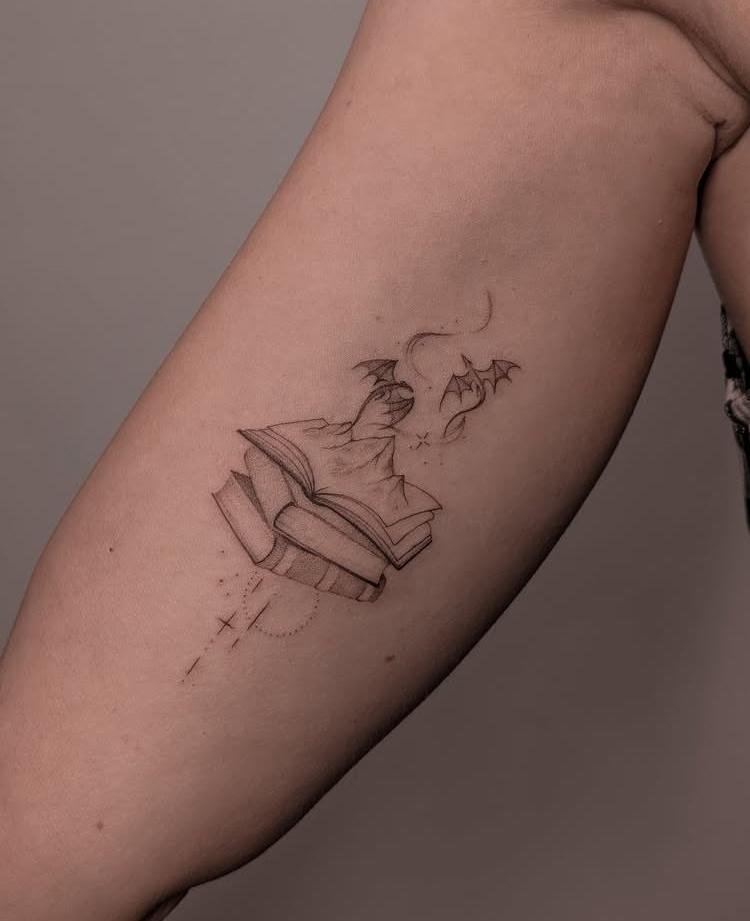
If the image is inspired by a recognizable character or an illustrator’s exact artwork, ask your artist to create a fresh interpretation and check whether permission is needed for a close copy.
Books, Blooms, and a Cozy Cup
A book beside a steaming mug is an easy way to capture the comfort of a reading ritual. Add one flower, a few leaves, or a small crescent of steam instead of filling every gap. The cup can be plain, patterned, or personalized with a simple initial that matters to you. This design can be drawn as a compact cluster for the arm or made taller for the calf.

Think about how the objects overlap. Clear outlines and enough space between the mug handle, pages, and petals help each shape remain distinct as the tattoo settles and ages.
A Garden Growing Around the Books
Use vines and flowers to frame a stack of books rather than covering every spine. That lets the books stay recognizable while the botanical details add movement and color. Pick plants with meaning to you—a flower from a family garden, a birth-month bloom, or a leaf connected to a place you love. A wraparound arrangement can follow the forearm, while a centered stack may fit better on the upper arm or thigh.

Decide whether the plants should look realistic or illustrative before the artist drafts the piece. Mixing styles can work, but a clear visual direction usually makes a multi-element tattoo feel more cohesive.
For the Reader Who Loves a Little Magic
A small star, key, moon, or spark above a closed book can turn a simple reader tattoo into a subtle fantasy nod. The closed book makes a clean base, and a single accent keeps the design from feeling busy. Consider a spot where the outline can sit without being distorted by frequent movement, such as the outer forearm or upper arm.
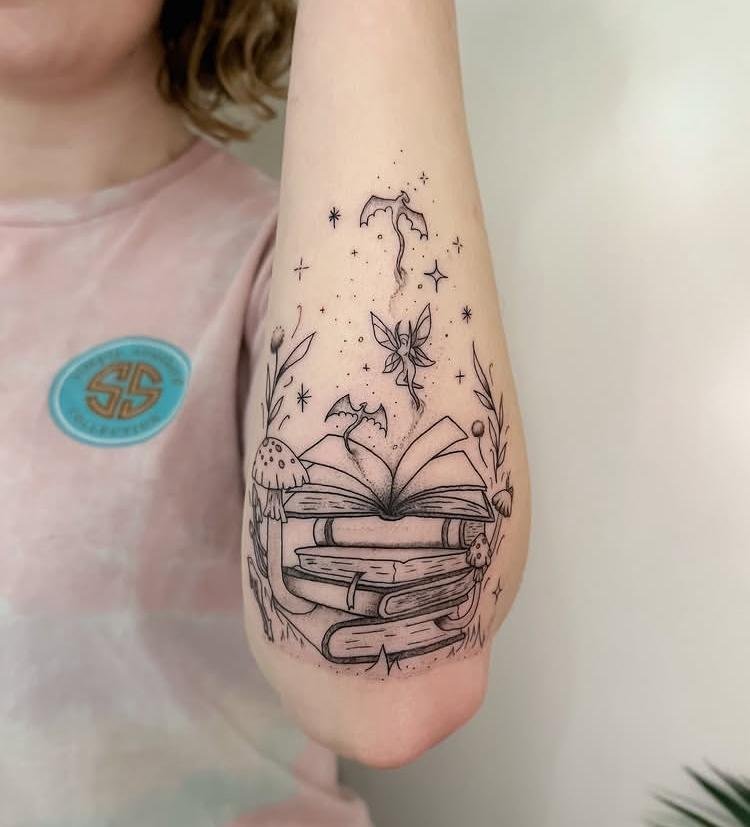
If you prefer a private reminder, the ribs or shoulder blade are options to discuss with your artist; comfort and skin movement vary from person to person, so placement is a personal decision.
Rich Red Blooms and Vintage Books
Vintage-style books paired with bold flowers can create a romantic, old-library mood. A red bloom might stand out against black linework, while a limited palette keeps the design from becoming visually noisy. You can also substitute a flower that has a real connection to your family, a favorite place, or a meaningful date.

The book’s spine and flower stems need enough room to stay separate. Ask to see the drawing at its actual tattoo size, especially if you are considering the wrist or ankle, where the available area may be limited.
Always a Book on the Brain
A tiny book above a simple head, thought bubble, or small halo of stars can express the feeling that reading is always on your mind. To keep this idea playful rather than cluttered, use one central book shape and only a couple of supporting marks. It can be drawn in a compact format for the upper arm, ankle, or shoulder.
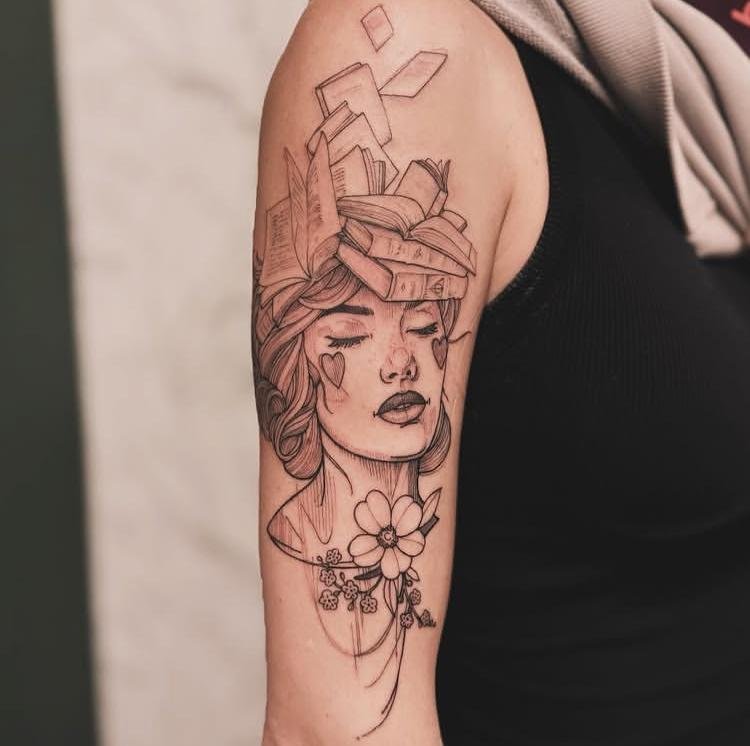
Avoid making the details so miniature that the book looks like a rectangle with indistinct lines. Your artist can simplify pages and spines while preserving the idea you want the design to communicate.
An Epic Adventure in Book Form
Turn a stack of books into a tiny mountain range, with a trail or moon above it. This can represent the way one story leads to another, or a reading goal you have reached. Varying the book heights gives the stack a natural rhythm; a few visible page lines are usually enough to signal the subject.

This idea can expand into a larger forearm or calf piece, but it also adapts to a smaller outline. Decide which details matter most before reducing the size, so the artist can keep the strongest shapes.
The Reader in Her Own Little World
A small reader seated inside a circle, window, or open book can represent the calm of finding a private space in a story. Make the figure’s pose simple and let a chair, blanket, or one plant suggest the setting. This design can be adapted for any gender or body type; the figure can also be abstract if you prefer not to depict a specific person.

Because miniature people can lose definition, consider a slightly larger placement on the upper arm, thigh, or shoulder blade. Ask the artist what scale will preserve the pose and the book.
A Dark Academia Bookshelf
A dark academia tattoo can feature a narrow stack of old-looking books, an ink bottle, or a small key, drawn in blackwork with controlled shading. The mood comes from the forms and contrast, so you do not need a long quote or a detailed library scene. A taller placement on the forearm or calf gives the spine shapes room to breathe.
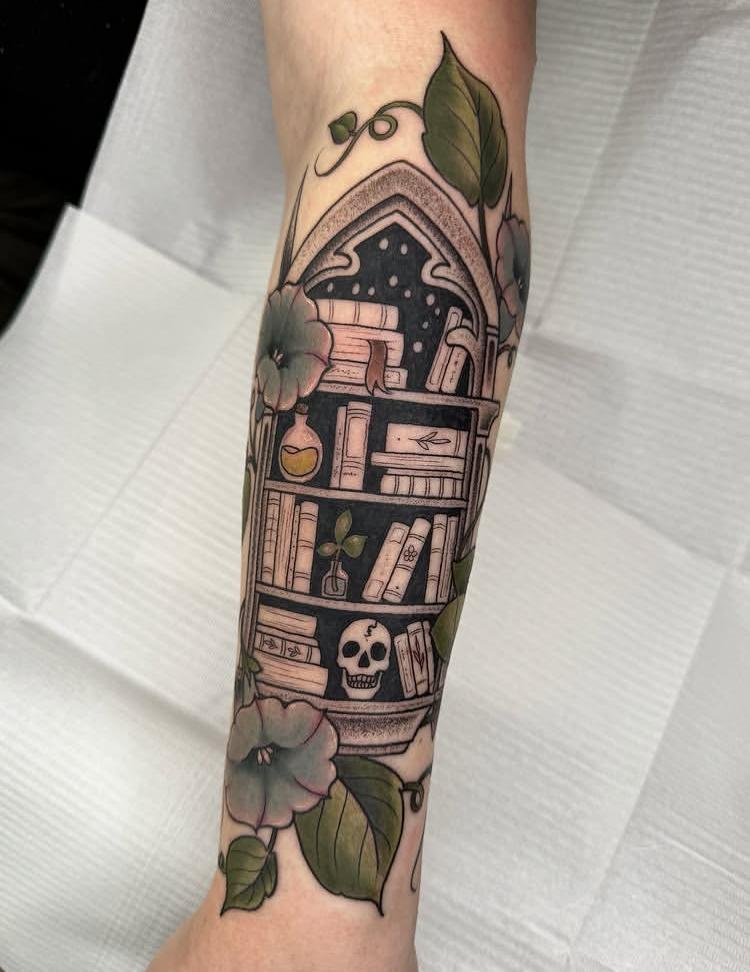
Bring a few references for the atmosphere you like—antique, scholarly, gothic, or understated—and explain which elements you want to avoid. This helps the final design feel like yours instead of a generic aesthetic collage.
Cozy Reading With a Halloween Twist
A book, little ghost, and crescent moon can give a cozy reading tattoo a seasonal wink without making it a holiday-only design. Keep the ghost friendly and the book recognizable; the concept can be black and gray or use one accent color. A small floating star or leaf can fill open space without crowding the main shapes.

If you want the tattoo to feel wearable year-round, make the book the main subject and treat the Halloween detail as a small accent. That balance keeps the design tied to reading rather than one calendar moment.
Books, Blooms, and an Evening Drink
Pair an open book with a glass, a sprig, or a few evening stars to suggest the quiet end of a long day. Choose one vessel and one botanical detail instead of combining several drinks and flowers in a tight cluster. A horizontal layout can sit along the forearm or shoulder, while a compact version may fit the upper arm.

Talk through which parts need to be recognizable at a glance. The glass, page edges, and petals all use fine contours, so leaving breathing room between them can make the final tattoo easier to read.
A Floral Shelf Full of Color
A shelf of books with flowers tucked between the volumes offers a colorful option for readers who want more than a single symbol. Limit the number of spines and choose a few colors that work together; the design does not need to reproduce a real bookshelf exactly. The upper arm, outer forearm, or thigh can give a horizontal shelf enough space.
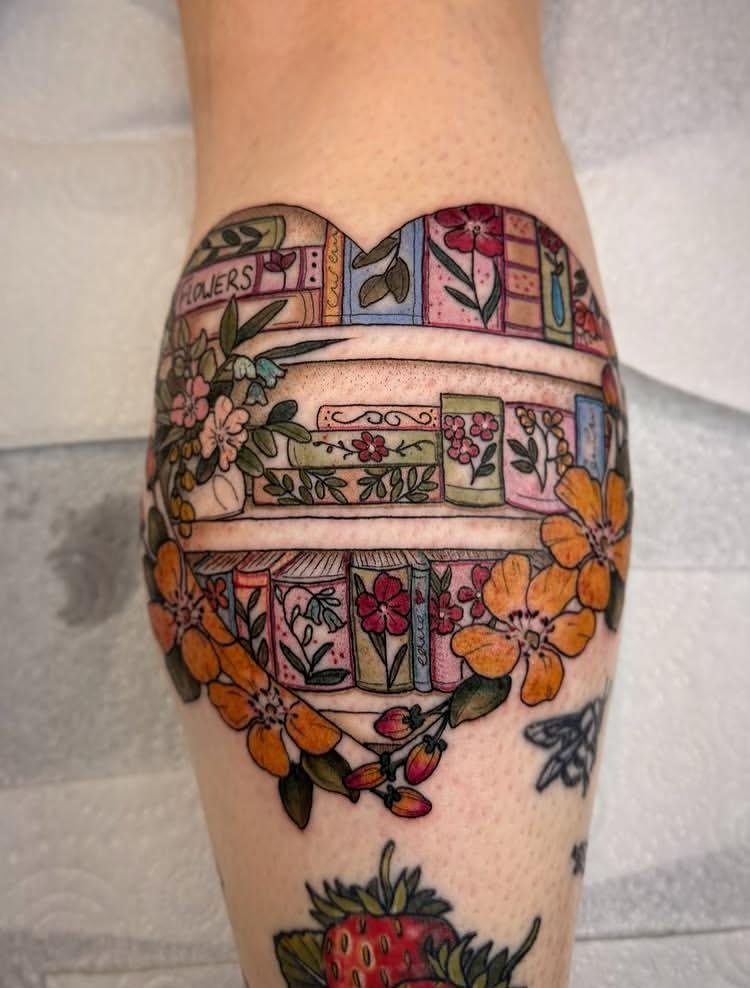
If you want one or two book titles included, check the lettering size with your tattoo artist before finalizing the sketch. Tiny spine text can blur together, so a symbol or color cue may be a clearer personal reference.
Gothic Library Energy
A pointed arch, a small window, or a candle beside a stack of books can suggest a gothic library without needing an entire room. Use a strong silhouette for the arch and reserve detailed shading for one focal area. This keeps the scene atmospheric while avoiding an overworked design.

For a private or larger composition, the upper back, thigh, or shoulder blade may offer more space than the wrist. Ask how the arch shape will follow the area you choose, since body contours can change the way a geometric frame appears.
The Coziest Reading Companion
A cat curled beside a book is a familiar way to celebrate a favorite reading spot and a beloved pet at once. The animal can be drawn as a simple silhouette, a few clean lines, or a more detailed portrait if you have enough room. Add a blanket or a crescent-shaped tail only if it helps the pose read clearly.

If the cat represents a real pet, bring a clear photo and identify the markings or expression you want preserved. A small portrait needs more space and thoughtful simplification than a generic cat outline.
A Tiny Book With a Touch of Magic
A single closed book with one star, tiny moon, or little ribbon is a practical choice for someone who wants a small tattoo. Keep the cover shape clean and pick one accent rather than trying to include several symbols. This design can work on the upper arm, ankle, or outer forearm, depending on the detail and scale.

“Tiny” is not one fixed measurement: hands, skin, and the artist’s approach all affect how much detail can be used. Ask for a stencil preview at the intended size before deciding whether to keep or simplify small marks.
Minimalist Reader Linework
A one-line book, bookmark, or pair of page curves can express a love of reading with very little visual weight. Minimalist tattoos depend on shape and spacing, so avoid adding extra flourishes just to fill empty areas. The wrist, inner forearm, or ankle may suit a small outline, but your artist can advise how the design will sit on your skin.

A thin style is not automatically the best fit for every placement or skin type. Discuss line weight, healing, and the artist’s portfolio so you understand how the final marks may look after the tattoo has healed.
A Full Fantasy Reading Adventure
If you want a larger piece, build a whole story scene around an open book: a path, a distant tower, a small creature, and a sky above the pages. Plan the scene in layers so the book remains the anchor and the details support it. The thigh, upper arm, or back can offer more room than a small wrist design.
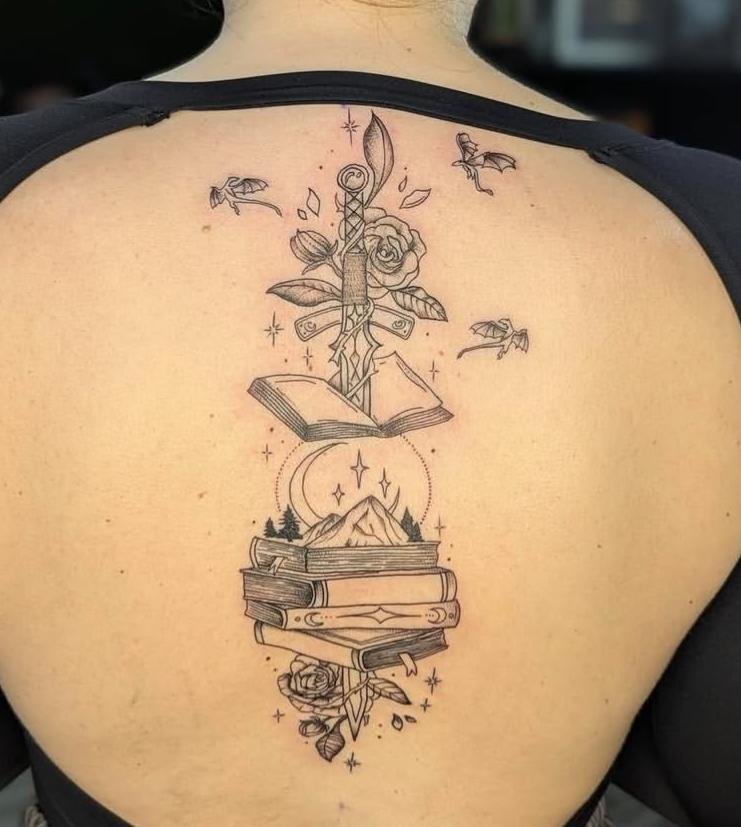
Start with the mood and two or three must-have details. A long list of symbols can compete for attention, while a clear hierarchy helps the artist shape a balanced composition that fits the chosen area.
Where the Pages Take Flight
Loose pages, paper birds, or a few leaves rising from an open book can suggest imagination and change. Keep the movement flowing in one direction, especially if the tattoo follows the arm or leg. A small number of flying shapes is usually enough to create a sense of motion without making the design difficult to follow.

Consider whether you want literal paper pages or more abstract forms. The first reads immediately as a book; the second can feel more personal if you want a literary reference that is not obvious to everyone.
A Bookshelf Wrapped in Blooms
A vertical bookshelf softened by climbing flowers can be a graceful option for the forearm or calf. Choose a few visible books and let the vine frame one side rather than crossing every spine. This makes the piece feel botanical while keeping the reading theme easy to spot.

A wraparound design can change appearance as your arm turns, so ask to see how the vine and shelves align from several angles. Your artist can adjust the layout to suit the area rather than forcing a flat reference onto a curved surface.
The Dreamiest Library Window
A window with a book, moon, or distant stars can represent a quiet reading escape. Choose a simple frame shape—arched, rectangular, or round—and limit the view beyond it to one or two elements. This gives the design a clear focal point and allows it to scale for a forearm, upper arm, or shoulder.

If the window connects to a real room or memory, use a small architectural detail that makes it recognizable to you. A personalized curtain pattern or view can carry meaning without adding a long block of text.
A Serpent Around the Story
A snake winding around a book can give a literary tattoo a bold, mythic edge. Decide whether the snake is decorative, symbolic, or connected to a specific story before adding extra details. Give the body enough room to curve around the book without hiding the pages. The forearm, calf, or upper arm can suit a longer composition.

Scale patterns and lettering can become busy when combined. If you want the book to remain the main subject, keep the snake’s pattern restrained and avoid placing tiny text beneath a dense area of linework.
For Readers Who Also Love Dinosaurs
A small dinosaur carrying a book, peeking over its pages, or sitting beside a stack can make a reader tattoo feel playful. Use a clear silhouette first, then add one recognizable feature such as a tail, crest, or tiny pair of glasses. The idea works well as a compact upper-arm or ankle design.

If the tattoo is for a child or a family reading ritual, choose a detail that will still feel meaningful as tastes change—perhaps the animal and book rather than a current catchphrase or character.
A Whole Reading World in One Piece
A larger composition can combine a bookshelf, open window, plants, and a reader into one connected scene. To keep it coherent, pick a central subject and use the other elements as a frame. This can be a half-sleeve, thigh piece, or back design, depending on the level of detail and how visible you want it to be.
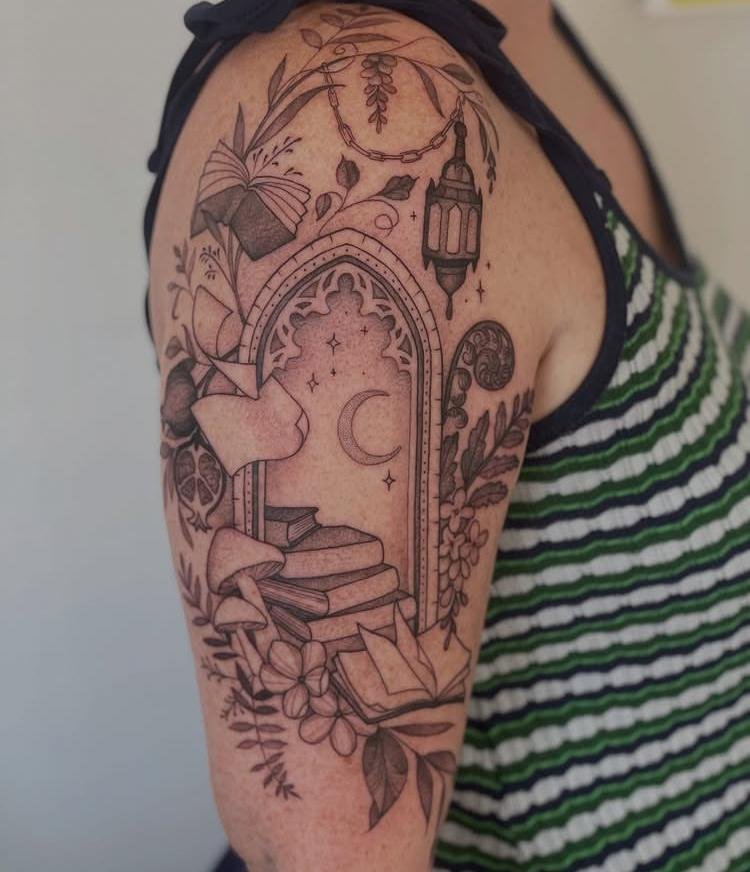
Large tattoos often benefit from more than one planning conversation. Review the outline, placement, and color plan before the appointment, and be open to simplifying areas that look crowded at the final scale.
How to Choose a Bookish Tattoo That Feels Personal
Begin with the feeling you want to keep. You might want a reminder of a book that helped you through a change, a tribute to a person who read to you, or a small symbol for the worlds you love to visit. Naming that reason helps narrow a long inspiration list into a design with a clear center.
Next, choose one main symbol. An open book can suggest discovery; a bookmark can stand for a reading habit; a shelf can reflect a lifelong collection; a window or path can turn the idea into a personal scene. These meanings are suggestions, not fixed definitions. The same symbol can mean different things to different readers.
Then decide how direct you want the reference to be. A general book or genre-inspired motif is flexible. A title, character, or recognizable illustration can make the design more specific, but it may also need more research and careful adaptation. Bring notes about what matters to you rather than asking an artist to reproduce someone else’s tattoo exactly.
For other symbolic tattoo inspiration, browse our guides to hourglass tattoo ideas, dandelion tattoo ideas, and twin tattoo ideas. Seeing how different motifs use shape and space may help you describe the style you want.
Placement, Size, and Lettering
Placement changes how a tattoo is seen and how much room the artist has to work. The forearm can display a book or a short line of text; the upper arm and thigh offer room for larger scenes; the ankle or wrist may suit a simple symbol. These are starting points, not rules. Body shape, movement, skin condition, visibility, and your own comfort all matter.
Ask the artist to show the design at its actual size, not only enlarged on a phone screen. Fine details that look crisp in a digital drawing may need to be simplified when reduced. Give small shapes enough separation, and decide which details are essential before asking for a micro tattoo.
Quotes deserve special attention. Pick a short phrase that you have checked against the book or a reliable edition, including spelling, punctuation, and line breaks. Letter spacing and font choice affect readability. If a phrase needs to be tiny to fit the placement, consider using a single word, a symbol, or a small book instead of forcing a long passage onto a narrow area.
For a tattoo tied to a specific novel, keep any quotation brief and verify the wording. This guide is about design inspiration rather than legal advice; copyright rules can depend on the work and how it is used. The U.S. Copyright Office explains that copyright protects original literary and artistic works. If you want to reproduce a substantial passage or a specific illustration, get qualified guidance or permission from the rights holder rather than assuming every use is automatically allowed.
Make the Design Your Own
A personal tattoo does not need to invent a completely new symbol. It can become yours through a meaningful book count, a flower from a family garden, a familiar reading chair, a chosen color, or a small detail from a memory. Tell your artist which parts of an inspiration image you like—composition, mood, or line style—and ask for an original drawing built around those elements.
Try not to copy another tattoo or reproduce a book cover, publisher logo, or illustrator’s work line for line. The U.S. Copyright Office notes that original visual art and writing can receive copyright protection. That does not mean every book-inspired tattoo is a legal problem; it means a close reproduction of someone else’s specific artwork is worth checking before you commit. An artist can help create a fresh interpretation that communicates the same personal theme.
If you want a fictional character or a particular series reference, decide whether the tattoo should be recognizable to other fans or meaningful mainly to you. A color palette, object, setting, or custom symbol can nod to a story without relying on a direct copy of its official artwork.
Tattoo Safety and Aftercare
A tattoo is a permanent change to your skin, so choose a professional studio and ask about hygiene, sterile equipment, ink handling, and the artist’s experience with the style you want. The U.S. Food and Drug Administration advises consumers to think carefully before getting tattooed and to contact state or local health departments for safety information. Read the FDA’s tattoo safety guidance before your appointment.
Follow the aftercare instructions provided by your tattoo professional, and contact a healthcare professional if you develop a reaction or have concerns about healing. The American Academy of Dermatology provides guidance on caring for tattooed skin. If you have a skin condition, allergies, or questions about a health risk, discuss them with a qualified clinician before booking.
Bookish Tattoo FAQs
What are good small bookish tattoo ideas?
A single closed book, simple bookmark, open-book outline, or short word can work well as a small concept. The artist may need to simplify fine details so the design remains clear at the final size. Ask to review a stencil at the placement you have in mind.
Where should I place a book tattoo?
Forearms, upper arms, shoulders, thighs, ankles, and wrists are common areas to discuss. A larger scene needs more room than a single symbol, while a quote needs a placement that gives the lettering enough width and space. Your artist can explain how the design will sit on the specific area.
Should I get a quote from my favorite book tattooed?
You can, if the words matter to you and the lettering can be made readable at the chosen scale. Verify the exact text and source, keep the wording concise, and ask the artist to show the lettering at actual size. A symbol may be a better choice if the passage is long.
How do I make a book tattoo unique?
Combine a reading symbol with one personal detail, such as a flower, place, pet, or color that matters to you. Share references for mood and composition, then let the artist create a new drawing. A personal connection often matters more than adding many decorative details.
Can I use a character or book cover as tattoo inspiration?
You can discuss the reference with your tattoo artist, but avoid assuming that a precise copy of a book cover or illustration is free to reproduce. Copyright can protect original text and visual art. When you want a close reproduction, check permissions with the rights holder or seek qualified advice; an original interpretation is another route.
Do tiny fine-line tattoos stay sharp forever?
No tattoo stays exactly as it looks on appointment day. Healing, skin, sun exposure, placement, and the artist’s technique all influence how it looks over time. Ask your artist how much detail is suitable for the size you want and how to care for the tattoo after it heals.
Final Thoughts
The best bookish tattoo is the one that fits your story and your comfort level. You might choose one clean outline, a favorite reading ritual, a flower-filled shelf, or a full scene from an imagined world. Save a few ideas, note what each one means to you, and bring that short list to a professional artist. With a clear focal point, realistic sizing, and thoughtful placement, you can turn a love of reading into original art that feels like your own.