
A back-shoulder tattoo can sit on the shoulder blade, turn toward the upper arm, or stretch across the upper back. That difference affects how a design looks when you stand, move, and wear different necklines. These 25 back shoulder tattoo ideas range from compact butterflies and birds to floral panels, ornamental lines, and larger story-like pieces.
Use the gallery to find a shape or style that interests you, then ask your tattoo artist to adapt it rather than copy it exactly. The best placement depends on how much of the area you want to use, how visible you want the tattoo to be, and whether you may add to it later.
25 Back Shoulder Tattoo Ideas
As you browse, compare the shoulder-blade ideas with the pieces that wrap toward the arm. We moved the first idea and its image to the end of the gallery; the remaining image-and-idea pairs follow their original order.
Blackwork Peony Drape
Large peonies spread across the back of the shoulder in bold blackwork, using dark petals and open skin to create contrast. The broad floral shapes make the area feel like a composed panel instead of a tiny isolated mark.
Ask your artist to decide where the biggest bloom should sit before adding leaves or filler. A shoulder blade can hold a wider arrangement, while a piece that turns toward the arm may need a different edge so it looks complete from the side.

Hummingbird Bloom Cluster
A hummingbird hovers beside a cluster of colorful flowers, with the bird giving the dense petals a clear point of focus. This reference uses a compact cluster rather than spreading the design across the whole back shoulder.
Pick the flower colors and the bird’s direction before the drawing is finalized. Ask to see how the cluster reads when you turn your body, since a back-shoulder design can be viewed from the rear and from the side.
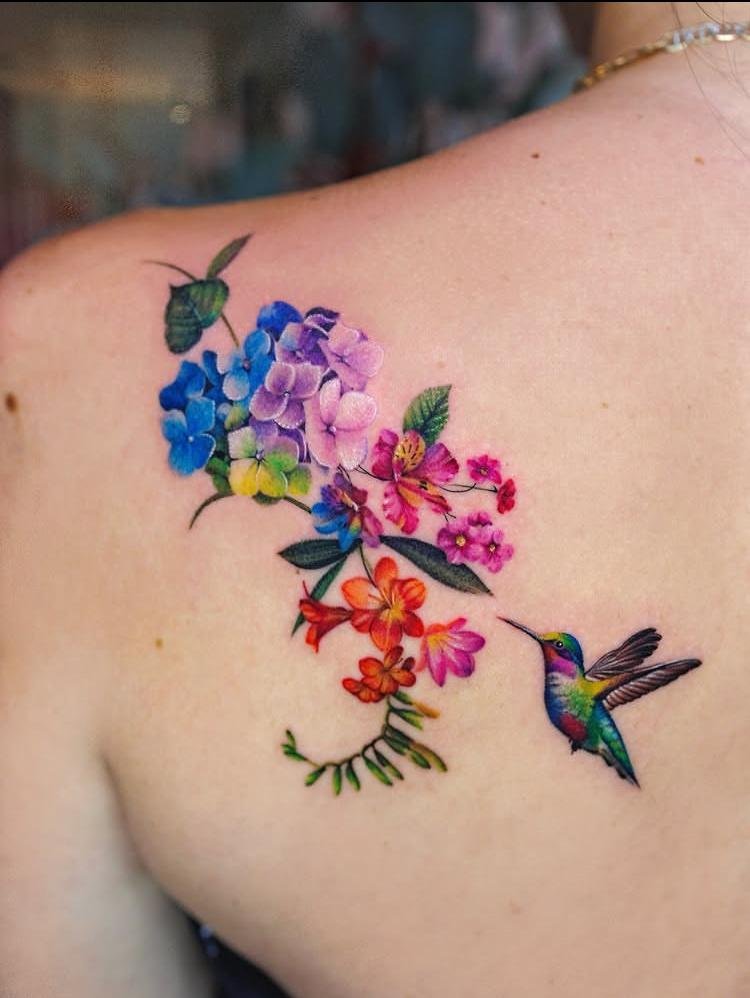
Rising Smoke Lotus
A fine-line lotus opens beneath a thin curl of smoke that rises from its center. The upward motion gives the design a vertical shape, which can sit near the shoulder blade without needing a wide background.
Keep the smoke line simple enough to remain separate from the petals. Ask your artist to place the lotus first, then decide how high the smoke should travel toward the neck. A stencil helps you see whether the top and bottom have enough breathing room.

Trailing Lily Elegance
Several lilies follow a gentle arc across the shoulder blade, with each bloom turned slightly so the branch feels like it is moving. The longer arrangement uses the back shoulder as a curved canvas instead of a flat rectangle.
Decide whether you want the flowers to sit close together or leave open space between them. Have the artist place the stencil with your arms resting naturally; raising an arm can change how the design appears across the shoulder area.

Lilac Flutter Duo
Two lilac-colored butterflies sit near one another, with a few small sparkles filling the open area around their wings. The limited palette keeps the pair coordinated without adding a large background.
You can turn the butterflies toward each other or have them travel in the same direction. Ask the artist to check the wing details at the intended size and to reduce extra sparkles if the back-shoulder area starts to feel crowded.

Petite Swan Portrait
A small swan glides through a light scatter of cherry-blossom petals. The bird remains the focal point, while the petals add movement around it without turning the design into a full scene.
A small portrait works best when the outline is easy to read. Ask your artist which feather or water details can be simplified, and try the stencil near the shoulder blade before choosing its final size.

Sculpted Wing Statement
A single wing uses layered feather shading to create a strong, sculpted look. The reference extends toward the upper arm, so it can work as a back-shoulder piece that begins on the blade and turns around the shoulder edge.
Decide how much of the wing should remain visible from the back and how far it should wrap toward the arm. Ask the artist to draw the outside contour on your body first; this keeps the feather layers from feeling cut off at an awkward point.

Autumn Branch Study
A branch with warm persimmon tones and cool foliage stretches across the shoulder. Its long shape gives the image an illustrative feel, while the fruit and leaves create small details for the eye to follow.
Choose the branch’s direction based on whether you want it to point toward the neck or the arm. Ask the artist to keep the fruit and leaves distinct, and check the color palette against healed examples before settling on a final design.

Ink Wash Lotus
One lotus and a few grass-like lines form a compact design with a loose ink-wash finish. The marks below the flower add movement and make the piece feel less like a formal emblem.
Decide whether the wash-like marks should remain soft and open or become darker accents. The shoulder blade gives you room to place the flower at an angle, so ask for a stencil that follows your preferred direction rather than copying the reference flat.

Crane Beneath a Pale Moon
A crane moves above dark waves, with a pale moon and drifting clouds behind it. The layered scene uses the shoulder blade as a small landscape, where the bird, water, and sky can be read as separate parts.
Choose one detail to lead the scene—such as the crane’s shape or the moon—and let the rest support it. Ask the artist to simplify the clouds or waves if the design needs to be smaller, and check that the scene still reads from a normal viewing distance.

Baroque Scroll Line
Black scrollwork follows the shoulder’s curve in a symmetrical ornamental pattern. With no color or heavy fill, the design relies on the spacing and direction of its curls to create an elegant outline.
Ask the artist to map the center and endpoints carefully before adding smaller loops. The shoulder blade and upper back are not a flat sheet, so check the pattern from behind and at an angle to see whether the scrolls remain balanced.
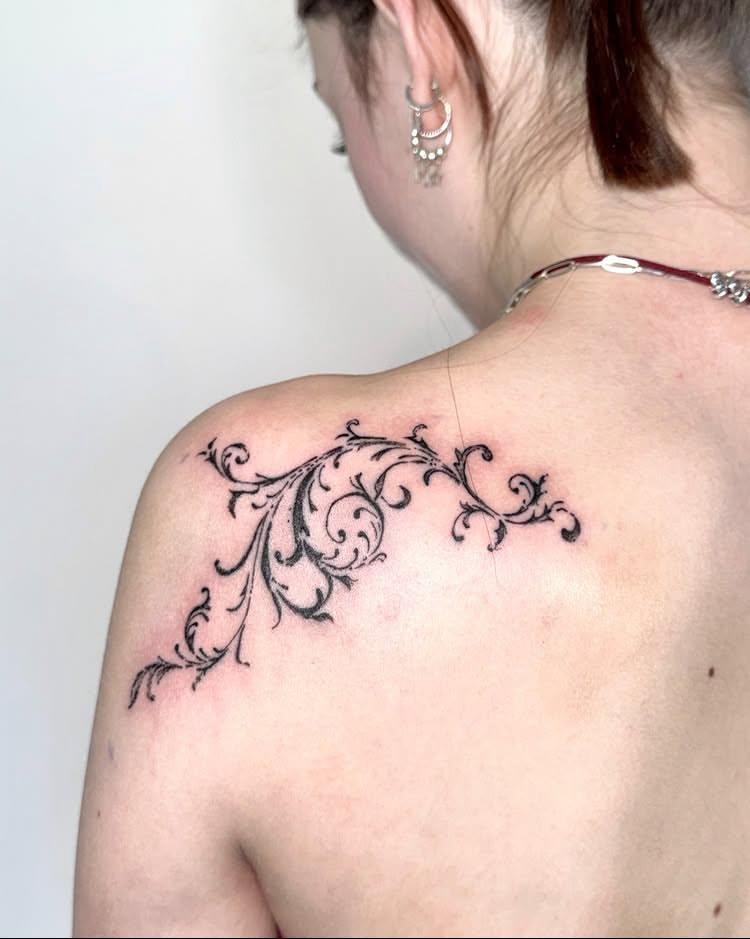
Perched Bluebird Detail
A bluebird rests on a branch with warm blossoms nearby. The bird and flowers give the piece a compact nature-study look, with color drawing attention to the main subject without filling the whole shoulder.
Decide whether the branch should stay horizontal or angle toward the neck. Ask the artist to make the bird’s outline and beak clear at the chosen size, then check how the blossoms sit when viewed from behind and from the side.

Butterfly Trail Up
A trail of butterflies climbs from the shoulder toward the neck, with tiny hearts or sparkles placed between the wings. The ascending path gives the design a clear direction and makes use of the space between the shoulder blade and neckline.
Choose where the trail should begin and stop before adding fillers. A stencil lets you see whether the butterflies look connected without forming a crowded column. If you want the marks to remain delicate, keep each butterfly’s wings simple and give them room.
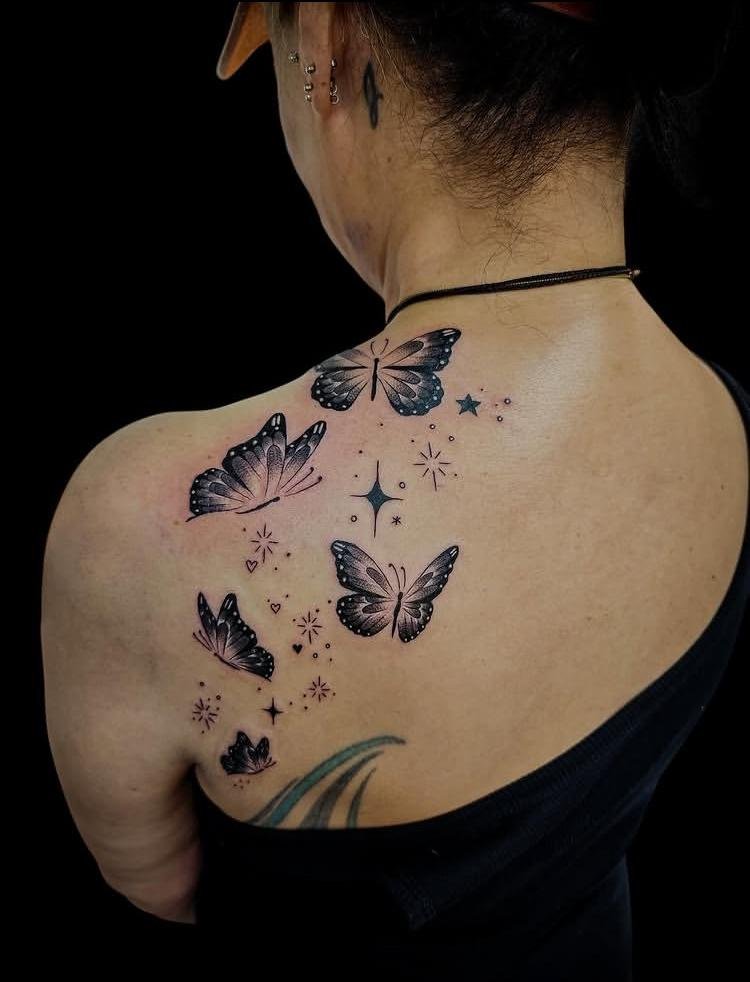
Half Bloom, Half Shadow
A wing transitions into a small floral cluster, pairing a dark, feathered half with lighter petals. The contrast gives the design a clear split while keeping both sides joined in one shape.
Decide where the transition should happen and whether you want a crisp edge or a gradual change. Ask the artist to show the design at actual size so the flowers do not disappear beside the darker wing.

Sketch Fan Florals
A fan-shaped group of flowers opens near the shoulder blade, with loose lines extending downward toward the upper back. The sketch-like marks add movement and make the composition feel less formal than a tightly packed bouquet.
Set the stopping point before the lines reach the spine or arm. Ask your artist to keep the main flowers clean and use the trailing marks sparingly. This makes the design feel intentional rather than unfinished when viewed from behind.

Moonlit Portrait Rose
A crescent frames a softly shaded portrait, with a rose above and a short line of script nearby. The design combines several motifs, so the crescent acts as a border that helps hold the portrait and flower together.
Confirm the exact wording if you keep the script, then decide how much of the portrait detail can fit at the final scale. Ask the artist to show the face, rose, and moon as one stencil so you can judge whether any element needs more room.

Night Watcher
An owl’s steady face sits amid soft charcoal-like marks, with a small muted-red detail warming the darker design. The eyes create a clear focal point, while the surrounding texture gives the shoulder piece a dusk-like atmosphere.
Ask the artist to keep the eyes and beak easy to read before adding splatter or feather texture. If you prefer a smaller tattoo, simplify the background first so the owl remains the most recognizable part.

Blue Jay and Magnolia
A blue jay rests among magnolia blossoms, mixing the bird’s cool color with broad petals. The composition can feel like a nature illustration, with the shoulder blade giving the flowers room to open around the bird.
Decide whether the bird should face inward toward the back or outward toward the arm. Ask the artist to leave clear space around the beak and flower edges, then check the design in a relaxed posture so the branch does not bend unexpectedly.

Fractured Moonlight
Sharp lines break around a crescent, with faint clock-like marks adding a measured, geometric quality. The design pairs a clean structure with a softer moon shape, creating contrast without relying on color.
Choose how many intersecting lines you want; extra marks can make a compact design feel busy. Ask the artist to test the angles on the shoulder blade and check that the crescent remains visible as the first focal point.

Magical Girl Moment
A colorful anime-inspired figure uses pastel tones and small sparkles to create a nostalgic character tattoo. The design is more detailed than a small symbol, so the shoulder blade gives it space for the outline and color blocks.
Bring an authorized reference of the character or explain the features you want the artist to reinterpret. Ask how the hair, costume, and tiny accents will be simplified for the size and placement, and avoid assuming a phone image shows the final color accurately.
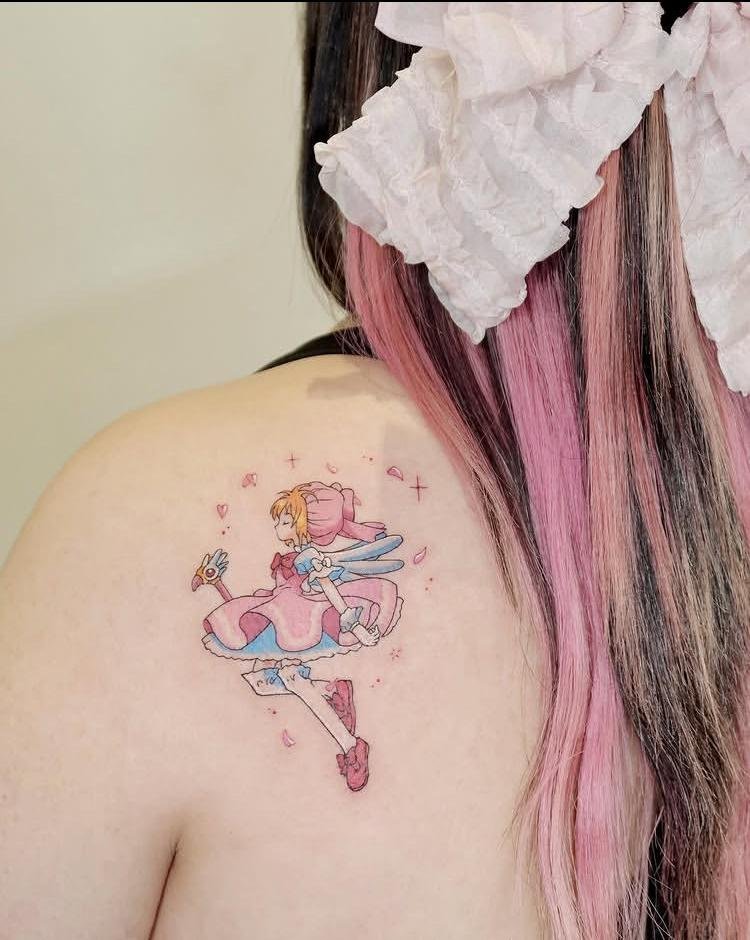
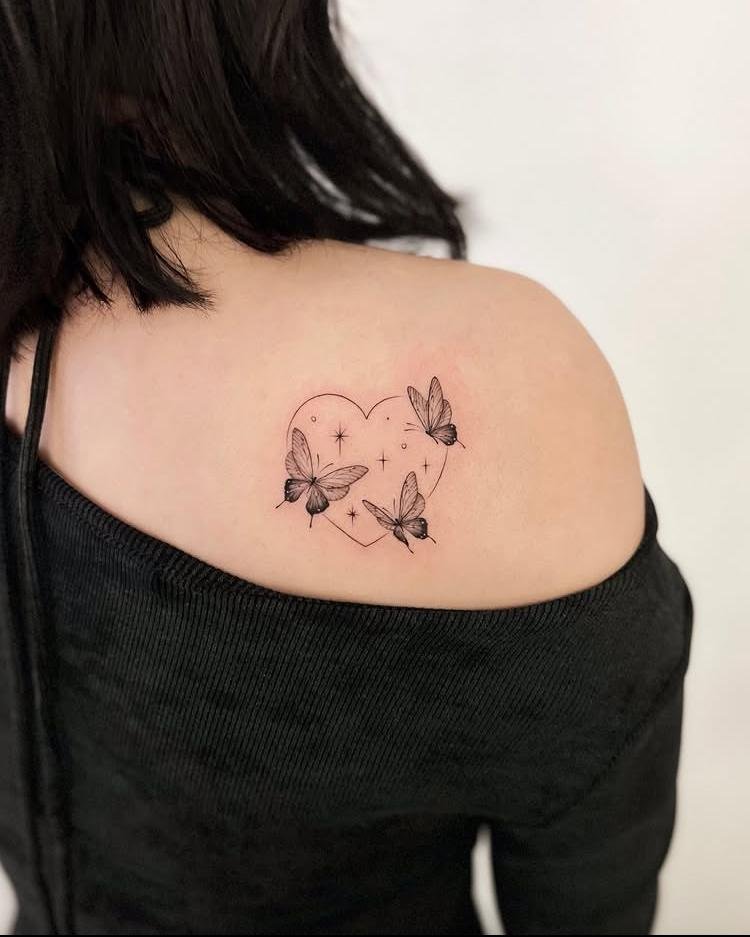
Heart Full of Wings
Three butterflies sit inside an open heart outline, with a few small stars around them. The simple border gathers several light motifs into one compact design, so the elements feel connected rather than scattered.
Decide whether the heart should be centered on the shoulder blade or angled toward the arm. Ask the artist to keep the butterflies distinct inside the outline and leave enough space between the stars and the heart edge.
Ribboned Blossom Cascade
Flowers link together with flowing ribbon-like lines across the shoulder blade. The long curves create movement between the blooms and can make the design feel like it is drifting across the back rather than sitting as a single cluster.
Ask your artist to map the main curve before choosing the flower size. Check how the lines move when you turn your shoulders, and decide whether the cascade should stop at the blade or continue toward the upper arm.

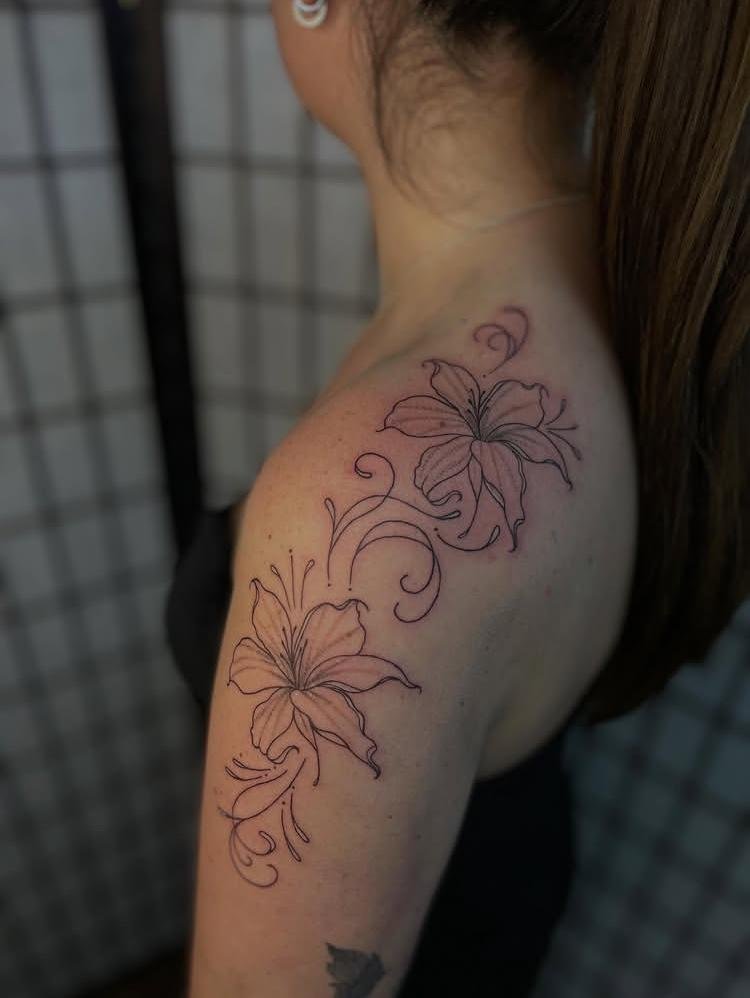
Twin Lily Drape
Two lilies descend along the arm from the shoulder, joined by looping tendrils. The soft outline gives the flowers an airy look, while the vertical arrangement can connect a back-shoulder tattoo with upper-arm art.
Decide whether the lilies should start on the shoulder blade or closer to the shoulder cap. Ask the artist to check the lower endpoint with your arm at rest, so the tendrils do not stop abruptly at the sleeve line.
Mirrored Doves in Flight
Two doves face one another in a symmetrical arrangement, with their wings extended and feather outlines kept clear. The paired silhouettes make a balanced back piece without requiring a large filled background.
Check the direction of both birds and the space between them before approving the stencil. Ask the artist to keep the wings proportional and to place the pair where the design stays centered when your shoulders rest naturally.

Twin Butterfly Whisper
Two small butterflies sit on either side of a few tiny roses, creating a quiet design that uses only a small area of the shoulder. The compact arrangement can feel delicate without needing a large floral frame.
Choose which side should hold each butterfly and keep the rose details simple enough for the scale. Ask your artist to try the stencil near the shoulder blade edge, then check whether you prefer it closer to the neck or farther toward the arm.

How to Plan a Back Shoulder Tattoo
Many tattoo galleries group shoulder-cap, shoulder-blade, and upper-back pieces together, even though they use different shapes. A shoulder cap can suit a rounded centerpiece. The back shoulder often works with a curve, diagonal, or design that begins near the blade and turns toward the arm. A broader upper-back layout has more room to stretch across both sides.
Choose the exact zone first
Point to the area you mean when you talk with your artist: the top of the shoulder, the back of the shoulder blade, the outer shoulder, or a path toward the upper arm. A stencil can show whether the design stays in one zone or needs to wrap farther than you planned.
Check how it reads from more than one angle
Back-shoulder tattoos are not always easy to see for yourself, so use a mirror or have someone take a clear photo of the stencil from behind and from the side. Stand naturally with your arms relaxed, then raise them to see how the design changes with movement.
Plan the edges and future additions
Before adding filler, decide where the tattoo should end. If you may want a sleeve, upper-back piece, or another shoulder design later, tell the artist now so the first outline leaves a useful path to build on. The edge treatment can make a standalone piece feel finished or connect it to future work.
Keep the details suited to the scale
Small feathers, petals, script, and dots may need more room than a reference image suggests. Ask your artist which elements should be simplified and view the stencil at full size. For color work, review healed examples in similar shades instead of relying only on a phone screen.
Review safe tattooing and aftercare
The FDA reports that contaminated tattoo inks can cause infections and that some people experience allergic reactions. Read the FDA’s tattoo safety guidance, ask the studio about hygiene and ink handling, and follow the artist’s aftercare instructions. Once the tattoo has healed, the American Academy of Dermatology recommends broad-spectrum, water-resistant SPF 30 or higher to protect tattooed skin from the sun; see its tattooed-skin care tips.
If you are comparing the nearby front-of-body placement, see our collarbone tattoo ideas and simple moon tattoo ideas.
Back Shoulder Tattoo FAQs
What is the difference between a back-shoulder and shoulder-blade tattoo?
The terms overlap, but a back-shoulder tattoo may sit closer to the shoulder’s outer curve, while a shoulder-blade design is usually placed farther onto the back. Ask your artist to mark the exact zone on your body before the drawing is finalized.
Are back shoulder tattoos easy to cover?
Coverage depends on the tattoo’s height, width, and the clothing you wear. Try the stencil with your usual shirts and straps to see how much remains visible.
What shapes fit the back shoulder?
Curved florals, wings, birds, and ornamental lines can follow the area’s shape, while a compact portrait or symbol can work as a standalone design. Your artist can adjust the outline to the space you choose.
Can a back shoulder tattoo become part of a sleeve?
It can be planned to connect with upper-arm art, but the design needs a clear direction and edge. Tell your artist about that goal during the first consultation so the initial placement leaves room for a future extension.
Final Thoughts
A back shoulder tattoo can be small and discreet or wide enough to form the start of a larger piece. Choose the zone first, check the design with a stencil from several angles, and ask your artist to shape the composition for your body. Clear edges and thoughtful spacing help the tattoo feel complete at any scale.
Pingback: Sleeve Tattoos for Women: 25 Arm Sleeve Ideas to Save
Pingback: Shoulder Tattoo Ideas: 25 Designs to Save
Pingback: Back of Neck Tattoo Ideas: 23 Tiny to Bold Designs