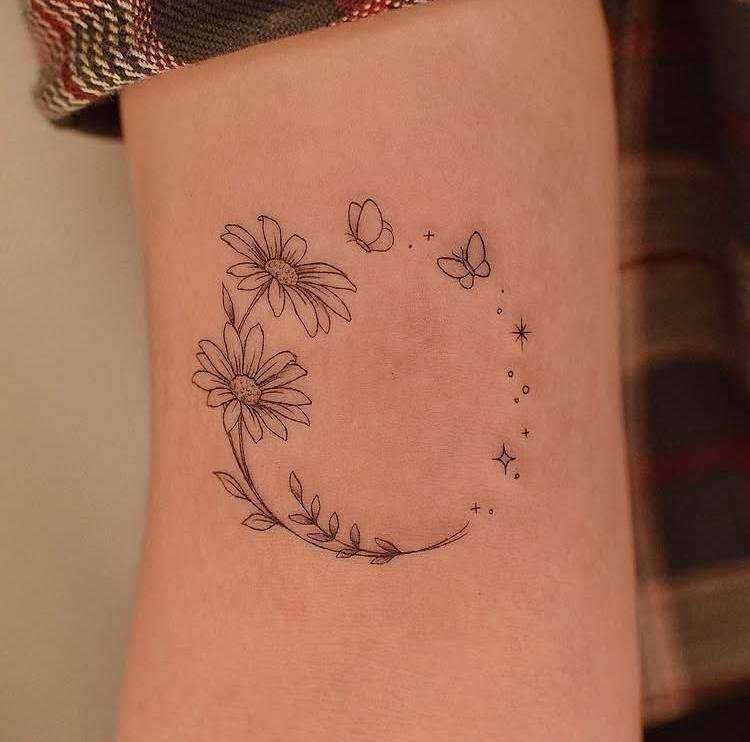
Daisy tattoo ideas can be as small as one clean outline or as detailed as a bouquet with butterflies, leaves, and ornamental accents. The familiar flower works across many tattoo styles, so the design can feel delicate, playful, bold, or botanical.
The 25 examples below range from tiny blooms and scattered petals to shoulder pieces and patterned florals. Pay attention to the spacing between petals and leaves. That negative space helps a small flower stay readable and keeps a larger composition from feeling crowded.
Think about what you want the daisy to represent, but remember that flower meanings are personal rather than fixed. You may choose the design for a memory, a favorite color, or its simple shape. If you also like soft botanical ink, compare these ideas with our <a href="https://sosimplefashion.com/dandelion-tattoo-ideas/">dandelion tattoo ideas</a>.
Choosing a daisy style
A daisy can be drawn with an open center and rounded petals, reduced to a fine-line outline, or combined with other plants and small decorative marks. Black ink keeps the shape simple. A limited color palette can make a few petals or leaves stand out without turning every part of the design into a focal point.
Decide whether you want one recognizable flower or an arrangement that feels more like a wildflower garden. For a small tattoo, ask your artist to simplify details that may be difficult to distinguish at the final size.
Size and placement ideas
Small daisies can fit the wrist, ankle, behind the ear, or along a finger, while a trail of flowers needs more length. The forearm, shoulder, ribs, and thigh give a bouquet or botanical branch room to unfold. Try a paper or temporary stencil in the intended spot and look at it from different angles before approving the design.
Plan the main flower first, then decide where any leaves, butterflies, or extra blooms should sit. Avoid placing tattoo ink over moles so changes in the skin remain easier to notice; the American Academy of Dermatology’s tattoo guidance recommends choosing skin that is free of moles.
Color, aftercare, and artist selection
White, yellow, pink, purple, and blue accents can shift the mood of a daisy design, but color is optional. Review healed tattoos from the artist in a style close to yours, and ask how they will keep each petal distinct at the size you want. A simple black outline with one accent color can be easier to read than many tiny details.
Choose a licensed studio that explains its hygiene practices and aftercare. Tattooing can involve infection or allergic reactions, so discuss ink and skin concerns before the appointment. The FDA’s tattoo safety guide describes risks worth understanding.
25 Daisy Tattoo Ideas, from Tiny Blooms to Floral Scenes
Compare these daisy tattoo designs by scale, line style, color, and placement. A simple flower can stay minimal or become part of a larger botanical composition; use the images to plan a custom design with your artist.
A Purple Pop
A purple accent can make a daisy feel playful and unexpected. Use the color on a few petals or supporting flowers and leave the central bloom easy to recognize.
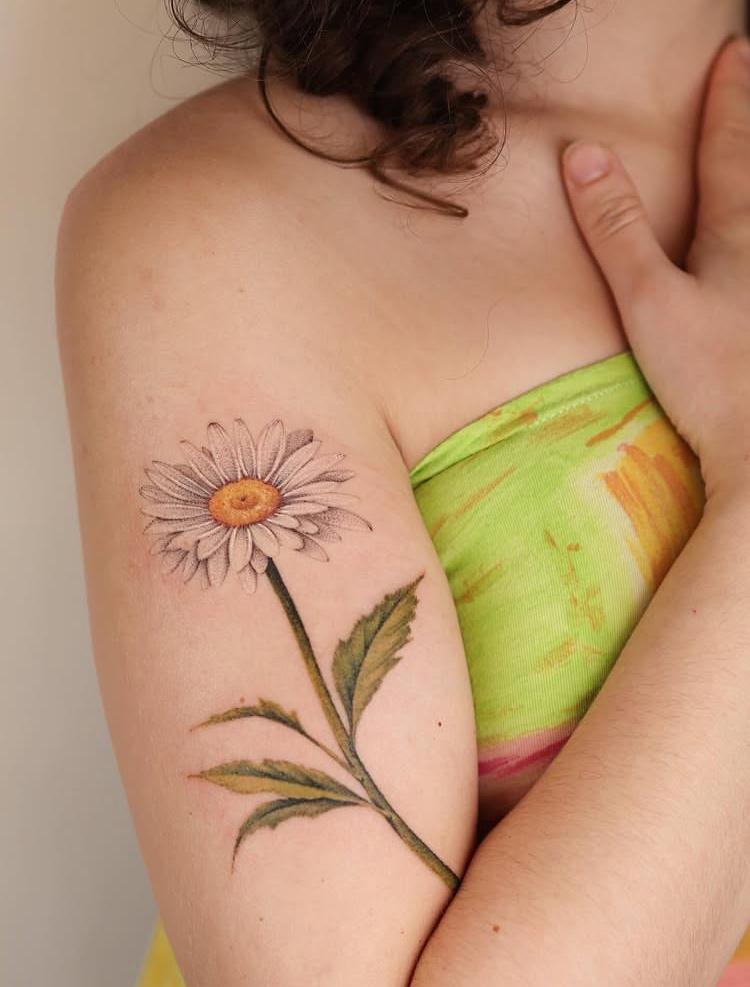
One larger daisy can make a clear statement without needing a full bouquet. Give the petals enough width to show their shape and use the center as the natural focal point.
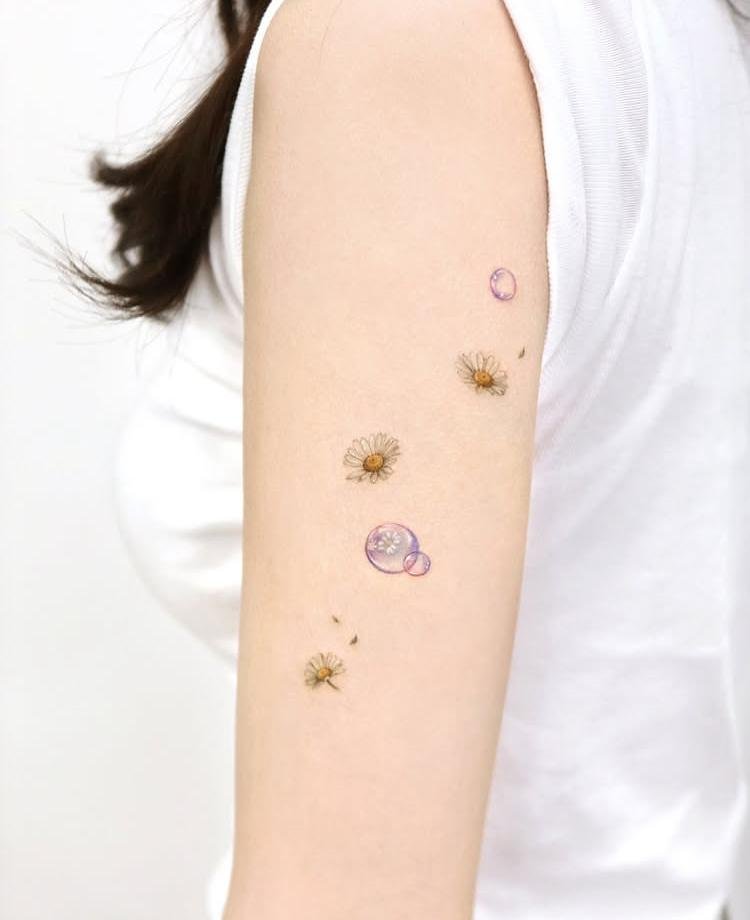
Tiny airy blooms work best when their outlines are clean and the spacing is open. Remove extra dots or fine leaves if they make the small composition look crowded.
A trail of petals creates direction, so plan where the flower begins and where the loose pieces end. Keep the petals connected visually without making them look like scattered debris.
A daisy paired with another flower adds contrast in shape. Pick one bloom as the main subject and keep the second smaller, so the pair feels intentional rather than busy.
A butterfly beside daisies makes a lively garden scene. Place the butterfly so its wings have room to show, and keep the flower stems from crossing through the main silhouette.
A little floral window frames the flower like a small illustration. Use a light border and enough margin around the petals so the frame does not overpower the daisy.
A blue bow gives the flower arrangement a decorative focal point. Decide whether the ribbon should tie the stems together or sit as a separate accent, then keep its loops readable at the chosen size.
A loose wildflower trail can combine daisies with smaller buds and leaves. Vary the stem lengths slightly and keep a clear direction through the arrangement, especially on a narrow placement.
Tiny characters among daisies create a whimsical look. Use original, simplified figures and give each one enough space; too many small features can compete with the flower shapes.
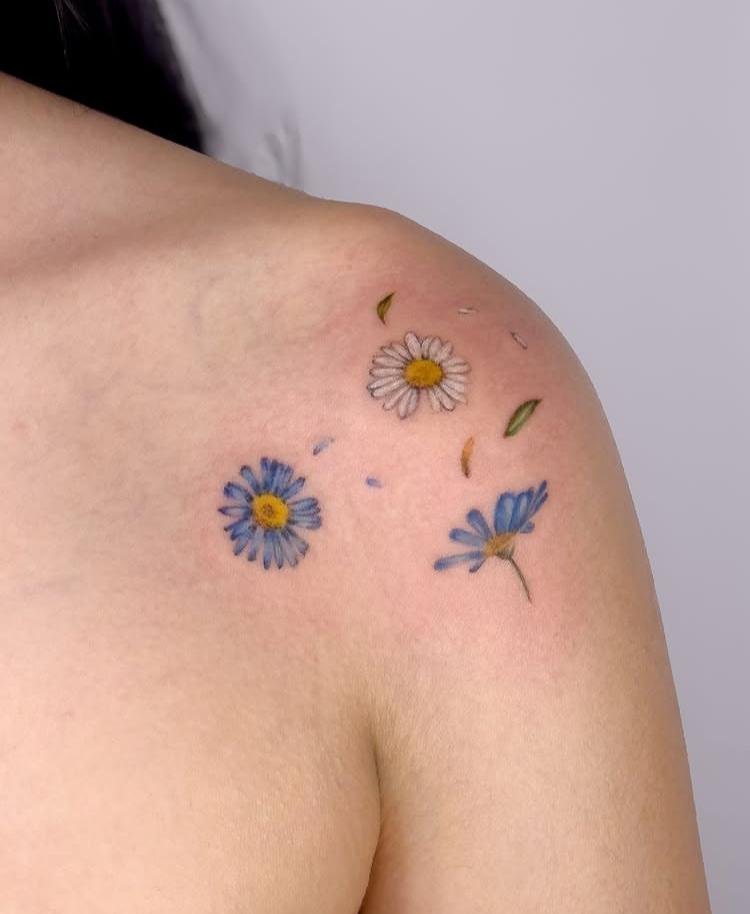
Bold blue petals make a daisy instantly noticeable. Ask the artist to show the chosen blue on healed work and use a strong outline to keep the flower defined.
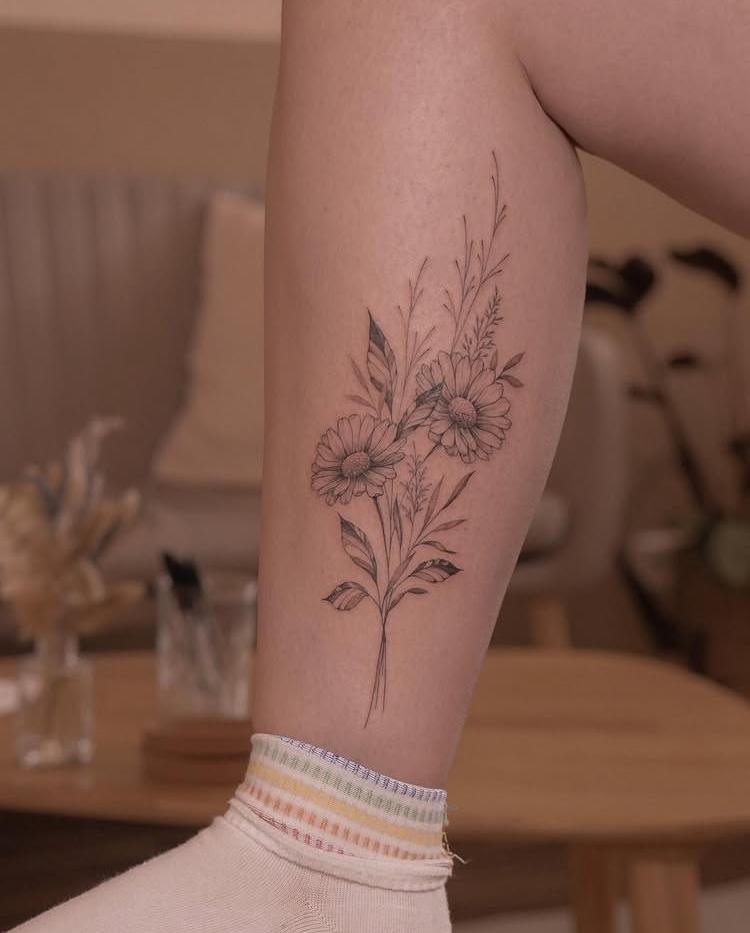
Botanical sketchwork can show stems, leaves, and petals with an illustrated quality. Keep the line weights consistent and reserve very fine details for an area that can hold them clearly.
A drifting flower can feel light when its petals and leaves move in one direction. Try the composition along a limb where that flow can follow the body’s natural line.
Ornamental blackwork combines the daisy with patterned shapes and stronger contrast. Decide which part should draw the eye first, then simplify surrounding marks to protect the flower’s outline.
Daisies and butterflies create a classic garden pairing. Balance the number of blooms with the butterfly’s size and avoid crowding the wings with petals or leaves.
Soft florals across the shoulder can follow the curve from the upper arm toward the collarbone. Use a larger bloom as an anchor and let smaller flowers taper at the ends.
A ladybug resting on a daisy adds a small point of color and character. Keep the insect distinct from the flower center and place it where its shape is visible at a glance.
A daisy in a pot can tell a small, complete story. Keep the pot simple so the flower remains the focal point, and consider a little negative space above the bloom.
A daisy loop around the elbow uses the joint’s curve as part of the design. Ask the artist to place the stencil while your arm is both bent and relaxed, so the ring stays balanced in motion.
Florals with butterflies can form a fuller composition across the arm or shoulder. Pick one main flower and one butterfly as focal points, then use smaller leaves to connect the remaining elements.
A tiny classic daisy relies on a clear outline and a few well-spaced petals. Keep the center simple and check that the flower still reads at the smallest size you are considering.
Soft color can give the petals a gentle look without changing the flower’s familiar shape. Limit the palette to a few tones, and leave small breaks between petals so the design does not become muddy.
Scattered daisies feel light when each bloom has room around it. Map the path before adding extra dots or leaves, and decide whether the flowers should follow a curve or sit loosely across the skin.
A small bouquet gives you a chance to mix bloom sizes and leaf shapes. Choose one main flower, then use the remaining details to support it rather than giving every stem equal weight.
A crescent garden combines a moon-shaped frame with tiny flowers. Keep the blossoms inside the curve or let a few extend beyond it, then check that the outline remains balanced at the final scale.
The wrist, ankle, upper arm, shoulder, or behind the ear can work, depending on the design. Ask your artist to scale the stencil to the available space and keep the petals clear.
Can daisy tattoos be colorful?
Yes. You can use color for the petals, center, or leaves, or keep the design in black ink. Review healed examples from your artist before choosing a palette.
Do daisy tattoos have one set meaning?
No. A daisy can represent a personal memory, a favorite flower, or simply a look you enjoy. The meaning belongs to the wearer.
Final thoughts
A daisy tattoo can be a tiny accent or the start of a full botanical piece. Choose the scale and style that feel right to you, then use a stencil and an experienced artist to make sure the petals remain clear in your chosen placement.
Browse 25 bookish tattoo ideas for readers, from books and bookmarks to reading scenes and story-inspired details. Choose a reference that feels personal without needing…
See 25 mom tattoo ideas, including handwriting, flowers, portraits, animals, and small everyday reminders. Use the gallery to find a personal tribute rather than relying…