
Dog memorial tattoo ideas can help you carry a small reminder of a companion who shaped your everyday life. This collection includes paw prints, portraits, flowers, names, favorite objects, and larger scenes, so you can compare different ways to make a tribute feel personal.
Some designs use an actual paw impression or a clear portrait; others use a collar, a toy, or a familiar pose. Save the details that remind you of your dog, then decide how much of that story you want to show in the tattoo.
25 Dog Memorial Tattoo Ideas
Locket, Open
An open locket holds a dog portrait on one side and a paw print on the other, with ribbon and flowers framing the shape. It turns two keepsakes into one compact design.
Choose which details matter most: the portrait, the print, or the locket itself. A slightly larger stencil may leave enough room for the small interior elements to stay separate.

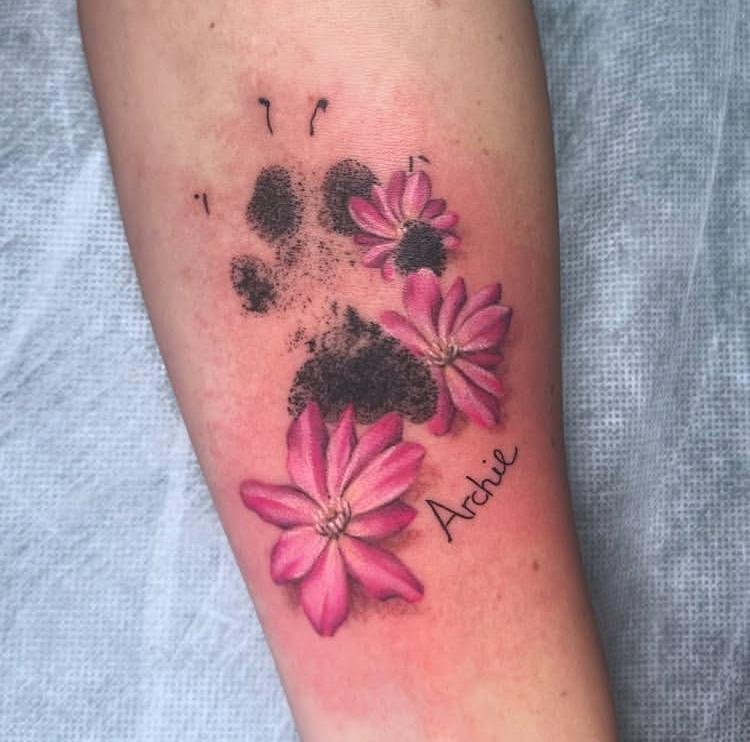
Archie in Pink
A dark paw print sits beside three pink daisies and the name Archie in slanted script. The soft flowers add color without taking attention away from the name.
You can swap in your dog’s name or a flower that reminds you of them. Check the lettering size and the spacing between the paw and petals before choosing the placement.
Soft Spaniel Sketch
This soft spaniel sketch focuses on the face, with linework suggesting the dog’s wavy coat and relaxed expression. Its quiet style makes the portrait feel like a small drawing carried on the skin.
Portrait work depends on the reference and the artist’s approach. Choose someone whose portfolio includes pet faces in a style you like, and review the stencil before adding extra details.

Pink Collar Print
A dark paw print is crossed by a thin pink collar and a small heart-shaped tag. The collar gives the simple outline a detail that can belong to one specific dog.
Use a familiar collar color or tag shape if that detail matters to you. Keep the band narrow enough to frame the print without covering too much of its silhouette.

Forever, Dolly
A textured paw print sits above Dolly’s name in flowing script, with dates and a short closing line beneath. The vertical layout reads like a small memorial plaque.
Confirm names, dates, and any final words exactly as you want them written. If you prefer a simpler piece, the name and paw alone can carry the same personal reference.

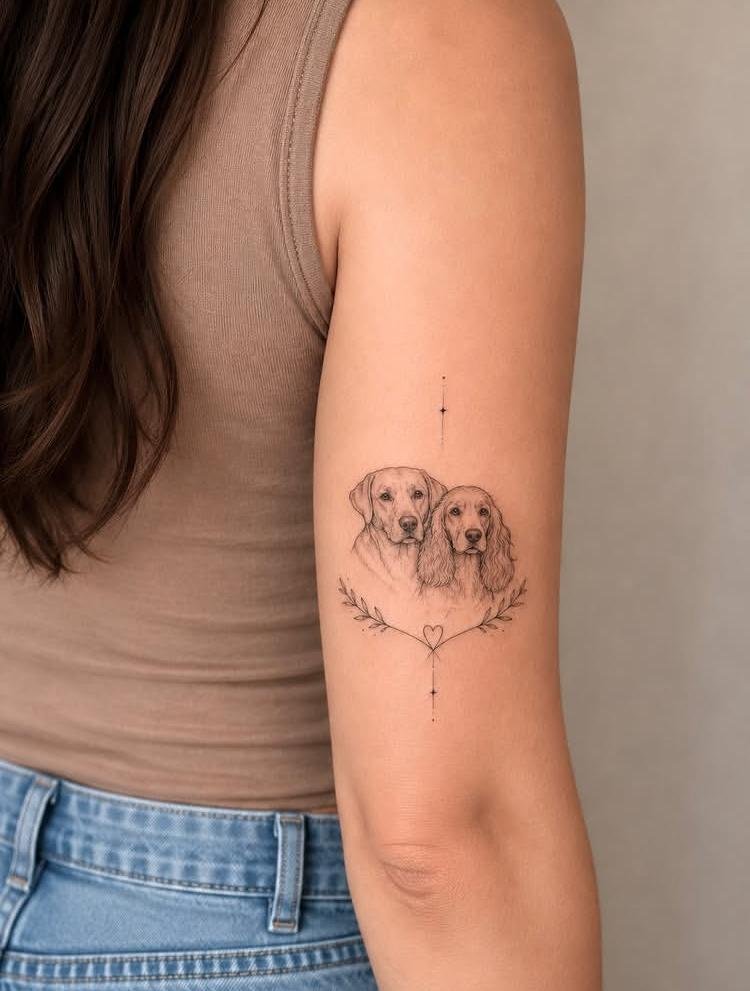
Two Best Friends
Two fine-line dog portraits sit side by side, with laurel leaves meeting at a small heart below. Tiny stars mark the outer edges and help balance the paired faces.
This works for two pets or for a dog and a person who shared a bond with them. Ask the artist to keep each face distinct at the size you choose.
Framed in Memory
A dog portrait sits inside a drawn Polaroid frame, like a favorite snapshot turned into a tattoo. The border gives the image a familiar shape without needing a detailed background.
Pick a photo with a clear view of the dog’s face and expression. You can keep the frame plain or add a short handwritten note, but leave the portrait enough room to read.

Flo, Every Lifetime
A paw print rests beside drifting dandelion seeds that lead toward a name. A short line of script completes the idea, linking the dog’s memory with a light, open botanical shape.
Decide whether you want the name beneath the paw or woven into the seed trail. A narrow layout may suit the forearm or lower leg, while a compact version can omit a few seeds.

Till Next Time
A small halo floats above floppy ears, with a tiny paw underneath. The silhouette communicates a memorial in a few clear shapes and keeps the design easy to recognize.
The image can stay symbolic without a name or date. Ask your artist to test the halo and paw spacing so the small marks do not merge into the ears.

Luna’s Mark
Luna’s paw print is shown with soft edges and a handwritten name, preserving an imperfect, personal mark rather than making it look like a generic icon.
If you have an actual paw impression, bring a clear copy and discuss which parts are recognizable. A simplified outline can keep the original character without reproducing every uneven mark.

Growing Through Grief
A long floral vine runs along the thigh, with four small dog faces worked into its stem. Each portrait gives the larger piece a separate focal point among the leaves.
This composition needs room for the faces and connecting flowers. Map the design on the thigh in a stencil and view it while standing and sitting before setting its final direction.

Golden Hour Portrait
A shaded golden retriever portrait emerges from a border of wildflowers, including daisies and sunflowers. The flowers frame the face and give the image a warm, outdoors-inspired setting.
A portrait with this much shading and surrounding detail calls for an artist comfortable with that style. Bring a sharp reference and discuss which flowers should stay if you need to simplify the frame.

Husky Angel
A husky’s face sits below a tilted halo, with wings behind the head and a small heart beneath. The recognizable features keep the memorial centered on the dog.
Use a photo that shows the markings around your husky’s eyes and muzzle. If the tattoo will be small, ask the artist which wing and halo details can be reduced.

Kaine in Bloom
Orange flowers form the outline of a paw, with Kaine’s name settled beneath it. The petals replace the usual pad shapes, turning a familiar symbol into a botanical tribute.
Choose a color palette that feels right to you and review how the flower outline reads without the name. The stencil can help you decide whether the lettering belongs below or beside the paw.

Amber Eyes
A close-up portrait draws attention to a dog’s amber eyes, dark fur, and the buckle on its collar. Those personal features make the design feel more specific than a generic breed portrait.
For a close-up, select a photo with clear eyes and a visible expression. Tell your artist which details make the portrait recognizable, then let them plan the contrast around those features.

Paw Print Promise
A paw impression sits above a spray of lilies, with a sweeping script line underneath. The flowers and lettering make the print feel like the center of a quiet tribute.
You can use the dog’s name, a short phrase, or no words at all. Keep the script separate from the paw outline so the two parts remain easy to distinguish.

Sleeping Frenchie
A French bulldog sleeps curled on a blanket with a favorite toy near its chin. A large paw print above the scene makes the image feel like a remembered moment at home.
Choose a reference that shows how the dog usually curled up or where the toy sat. A small number of recognizable objects can tell the story without adding a full room around the scene.

Maggie’s Trail
Maggie’s name sits beneath a swirled paw print, while a second print lower on the arm suggests footsteps. The spacing gives the design a sense of movement.
Think about how far apart you want the prints and which direction they should travel. Try the stencil with your arm relaxed, then adjust it if the trail feels too straight or too crowded.

The Long Walk Home
A lone figure crosses a bridge beneath birds, with one paw print pressed into the path. The scene suggests a journey together without spelling out a specific meaning.
If the bridge or landscape recalls a real place, share a photo or simple sketch with the artist. Keep the paw visible within the scene so the memorial detail does not disappear into the background.

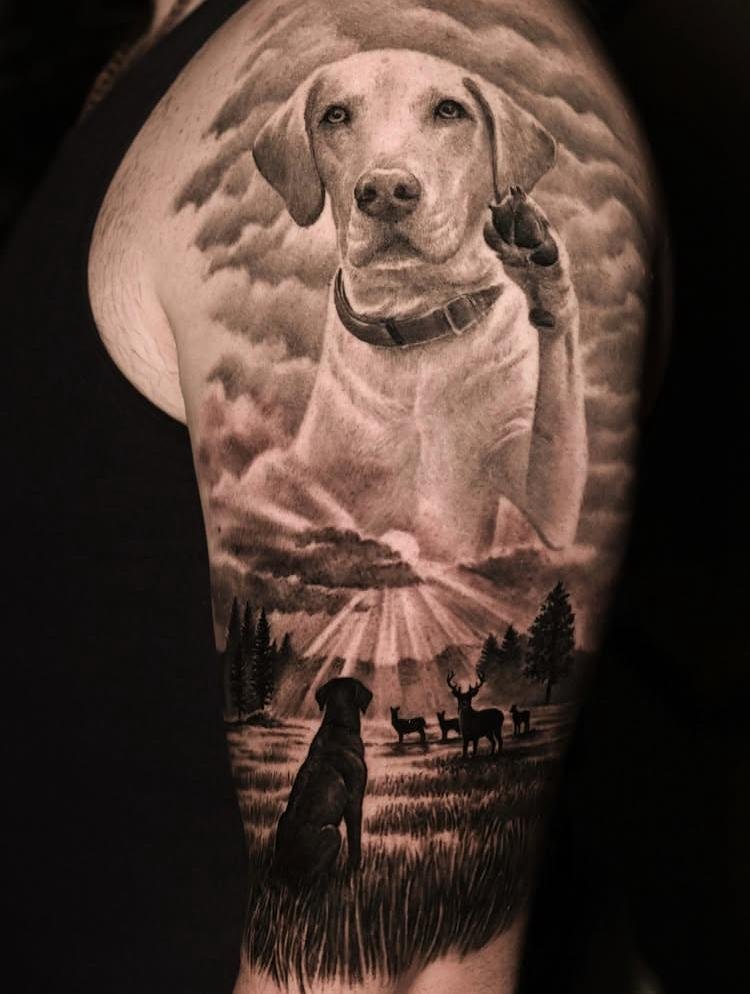
Field of Gold
A large sleeve-style scene pairs a dog portrait with a golden hunting landscape and deer silhouettes. It connects the dog with an activity or setting that may have been part of your life together.
A sleeve takes careful planning across the arm. Choose the portrait, landscape, and any animals you want first, then let the artist arrange transitions and open areas before adding smaller details.
Still Around
Four small dog portraits form the outline of one paw, with cursive lettering nearby. The layout brings several expressions together in one recognizable shape.
Use photos with similar angles or ask the artist how to make very different portraits feel balanced. Give each face enough room to read, and decide whether the script is essential.

Shaggy and Sweet
A scruffy dog’s face appears inside a ring of colorful forget-me-nots and peonies. The flowers frame the portrait like a wreath while keeping the dog’s expression in the center.
Select the flowers for their look or personal meaning, then choose which ones should be closest to the face. Leaving a little space around the fur outline can help preserve the portrait’s shape.

Charlie Forever
One continuous line forms a small dog and flower, with Charlie’s name curling into the design. The joined linework makes the tribute feel like a single drawn signature.
Ask to see where the line begins and ends so the silhouette stays clear. If the name is long, the artist may need to adjust the curve or use a separate line below.

Split Portrait
The dog portrait is split between realistic shading and open linework, with a small paw underneath. The divided treatment gives one face two different visual textures.
Choose which side should carry the stronger contrast and test the divider on the stencil. A clean gap between the portrait and paw can keep the two elements from blending.

A Kiss Goodbye
A fine-line scene shows someone leaning in to kiss a dog, with two butterflies above them. The human-and-pet moment gives this memorial a personal story rather than relying on a paw print alone.
If you want the face or pose to resemble a real memory, bring a clear reference photo. Keep the butterflies small so the central moment remains the focus.

How to Plan a Dog Memorial Tattoo
Choose the detail that feels like your dog
A paw, portrait, collar, toy, name, or familiar pose can all make a design specific. Think about the detail you recognize first when you picture your dog. That can become the center of the tattoo, with flowers, dates, or other symbols added only if they support it.
Match the artist to the design
A realistic portrait, a fine-line drawing, and a simple paw outline call for different approaches. Look through an artist’s own portfolio for work that resembles the style and subject you want. Bring a few clear reference photos and ask how the main features can be translated into a stencil.
Choose the size and placement together
A name and small paw may fit a compact area, while a detailed portrait or landscape needs more space. Ask to see the design at its intended size and on the body area you prefer. Check it from several angles and with the clothing you normally wear.
Proofread personal details
Check the dog’s name, dates, and any short inscription before the session. If you include a collar tag or handwriting, confirm the shape and spelling from the original reference. Leaving out a date or phrase is also an option when you want the image to stay simple.
Review hygiene and aftercare
The FDA warns that contaminated tattoo inks can cause infection and some people may have allergic reactions. Read the FDA tattoo safety guidance and ask your studio about its hygiene practices. After the tattoo has healed, the American Academy of Dermatology recommends broad-spectrum, water-resistant sunscreen with SPF 30 or higher; see its tattooed-skin care advice.
If you like designs built around an authentic print, browse our fingerprint tattoo ideas for more ways to use a personal pattern.
Dog Memorial Tattoo FAQs
What can I include in a dog memorial tattoo?
Common choices include a paw print, portrait, name, date, collar tag, toy, flowers, or a short phrase. Choose the detail that most clearly connects the design to your dog.
Should I use my dog’s real paw print?
You can use a real impression if you have a clear reference, or choose a stylized paw design. Ask the tattoo artist which parts of an original print can be kept at your chosen size.
What photo should I bring for a dog portrait?
Bring a sharp image that shows the face, markings, and expression you want to remember. If possible, share a few angles so the artist can understand the dog’s features.
Where should I place a dog memorial tattoo?
The right spot depends on the design’s size and how visible you want it to be. Compare the stencil on your preferred area and ask the artist how much room the details need.
Final Thoughts
A dog memorial tattoo can be a small paw, a familiar expression, a favorite toy, or a larger scene tied to a memory. Let the details come from your own relationship, then work with an artist to shape them into a design that feels right to carry.
Pingback: Dog Paw Print Tattoo Ideas: 25 Meaningful Designs