
Fingerprint tattoo ideas turn a personal print into a design that can reflect family, love, memory, or your own style. These 24 examples pair ridge patterns with hearts, flowers, butterflies, and other recognizable shapes.
If you plan to use another person’s print, ask permission and bring a clear reference image that you are allowed to share with your artist. A stencil can help you see how the pattern, lettering, and placement work together before you commit.
24 Fingerprint Tattoo Ideas
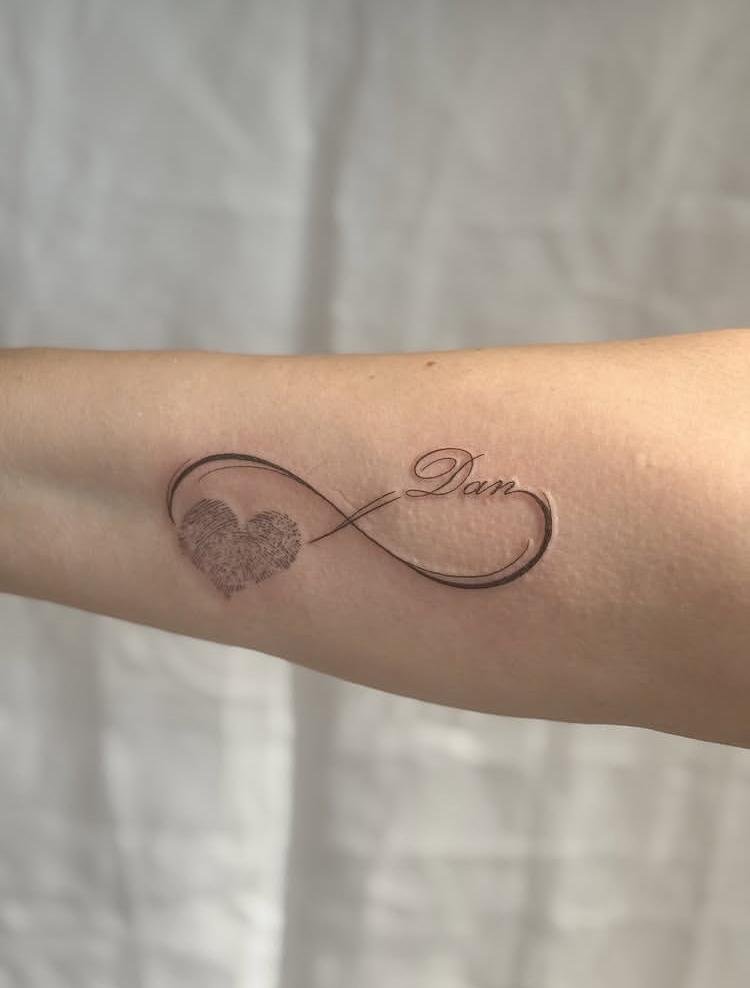
Infinity Print with Name Script
A fingerprint heart sits inside one loop of an infinity symbol, while a name follows the other curve. The connected outline brings the print and lettering together in a compact design.
Decide whose name belongs in the script and whether you want a date nearby. Review the stencil at its final size so the lettering has enough open space beside the ridges.
Ridge-Textured Petals
Fingerprint-style ridges fill the petals of a simple flower, while a slim stem keeps the outline light. The print becomes part of the bloom instead of sitting separately inside a heart.
A single flower can stay minimal, while a small sprig adds a little more movement. Leave clear gaps between petals so the ridged pattern remains distinct from the outer linework.

Love Script with Fingerprint Heart
Loose cursive spells “love,” with a fingerprint heart taking the place of one letter. That small switch gives familiar script a personal detail without adding a second large subject.
Check how the heart connects to the letters and read the word at arm’s length before approving the stencil. If the script feels cramped, open the spacing or use a simpler lettering style.

Fingerprint Cactus in a Pot
Fingerprint ridges form the arms of a small cactus planted in a shaded pot, with a tiny sun above. The mix of a desert plant and personal pattern gives this design a playful, custom feel.
The pot, cactus, and sun each add a separate shape. Choose the cactus as the focal point and simplify the smallest accents if you want the tattoo to fit a narrow area.

Half Print, Half Floral Butterfly
One butterfly wing is filled with fingerprint ridges, while the other uses floral linework. The two treatments create contrast within a single recognizable silhouette.
Look at the design as a whole before adding color or extra symbols. A centered stencil can show whether the wings feel balanced and whether each small petal has enough room.

Two-Print Heart with Family Script
Two fingerprint patterns meet to form a heart, with family names or short labels arranged around it. The paired prints are easy to distinguish within one outline.
Choose the people or dates you want to include before adding decorative script. Keep the lettering secondary to the prints so the central shape stays easy to see.

Collarbone Heart & Script
A shaded fingerprint heart anchors a flowing script line that curves toward the shoulder. The longer composition follows the collarbone area and can feel delicate without a full background.
Collarbone placement is visible with many necklines. Ask to see the stencil while standing naturally and wearing a top similar to what you usually wear, then adjust its angle if needed.

Print Blossoms on a Stem
Two solid fingerprint forms sit at the top of a single stem like a pair of blossoms. Sparse leaves keep the botanical outline open and let the prints stand out.
This can represent two loved ones without using names. A vertical layout may suit the forearm or lower leg, while a shorter stem can make the idea feel more compact.

Stacked Fingerprint Hearts
Three fingerprint hearts climb a slim vine, with small leaves or sparkles linking the shapes. Different heart sizes give the design a gentle rhythm and create room for more than one personal detail.
Decide what each heart represents before adding initials or dates. A clear order—such as oldest to newest—can help the vine feel intentional rather than crowded.

Botanical Bouquet with Music Notes
Two fingerprint-textured blooms share one stem, with a moth and music notes adding movement nearby. The design brings together flowers and music as a single keepsake.
Pick the notes or symbols that matter most instead of filling every open area. Leaving space around the blooms can help the ridge pattern remain noticeable.

Fingerprint Heart in a Floral Wreath
A fingerprint heart sits between loose floral clusters above and below it. The wreath frames the central print without turning the whole composition into a solid block.
The flowers can be uneven for a relaxed look or arranged more symmetrically. Keep the middle of the heart open enough to see its ridge pattern clearly.

Fingerprint Sunburst
Straight rays spread from a fingerprint at the center, with a small star beneath. The ridges become the core of a sunburst, so the print feels integrated into the symbol.
Choose a ray length and spacing that suit the placement. You can keep the star as a small accent or remove it if the overall design needs more breathing room.

Celestial Butterfly with Moon Phases
A shaded butterfly is paired with moon phases and small stars. Fingerprint texture can sit inside the wings, blending a personal mark with a celestial theme.
Let the butterfly remain the main subject and use the moon shapes as supporting details. A longer forearm placement can follow the phases, while a smaller version may work better without every star.

Sketch-Style Fingerprint Lotus
Open sketch-like lines frame lotus petals filled with fingerprint ridges. The mix of loose outlines and patterned centers gives the flower a hand-drawn quality.
Ask your artist to show which sketch marks will remain at the final size. If the design feels busy, preserve either the lotus outline or the smallest ridge detail first.

Fingerprint-Shell Sea Turtle
Fingerprint patterns divide the sea turtle’s shell into textured sections, turning the print into part of the animal’s body. The head and flippers keep the subject recognizable.
Check the shell sections in the stencil and leave space between them. A clean turtle outline can carry the idea on its own without adding waves or extra background marks.

Fingerprint Four-Leaf Clover
Four rounded leaves follow looping fingerprint patterns to form a clover. The compact silhouette gives the print a clear place in a familiar botanical symbol.
You can keep the clover simple or add a small initial beside the stem. If you add lettering, position it away from the leaves so it does not interrupt the ridges.

Fingerprint Balloons with a Little Girl
A little girl holds two balloons filled with fingerprint patterns, with small hearts floating nearby. The scene can work as a family keepsake or as a reminder of a meaningful childhood moment.
This design includes several parts, so resist shrinking every detail to make it fit. Review the figure, strings, and balloon patterns in one stencil and simplify any crowded accents.

Anatomical Fingerprint Heart with Florals
A fingerprint heart fills the lower part of an anatomical heart, while colored flowers grow from its upper branches. The design pairs a detailed central shape with a softer floral finish.
Decide whether the heart, the print, or the flowers should draw the eye first. A simpler color palette can help the main outline stay clear among the details.

Fingerprint Butterfly Wings
Mirrored fingerprint patterns form a butterfly’s wings, with a small red heart as an accent. The symmetrical layout makes the print pattern part of the butterfly rather than an added decoration.
One person’s print can be repeated across both wings, or two prints can be represented separately. Ask the artist how to distinguish them without crowding the center.

Fingerprint Love Script with Blossoms
Cursive “love” lettering includes a fingerprint heart, with two small blossoms curling from the word. The flowers add color and soften the script without taking over the design.
Read the lettering with your arm relaxed and turned slightly. If the stems cross the word, move the flowers or simplify the script before choosing the final placement.

Dotwork Fingerprint Heart in Florals
A heart made from dense dotwork ridges is framed by purple and blue flowers. The dotted texture creates a different finish from the curved lines of a traditional fingerprint pattern.
At the stencil stage, check that the dots and petals do not merge into one dark area. Your artist can adjust the spacing or reduce some of the smallest marks.

Winged Fingerprint Heart with Dates
A fingerprint heart sits above feathered wings, with dates below it. The vertical arrangement makes the print the central symbol while the dates add a personal reference.
Double-check each date and the order in which it appears. Keep the numerals distinct from the wing tips, and decide whether a simple type style or handwritten script suits the design.

Halo Butterfly from Twin Prints
Two thumbprint patterns become butterfly wings, with a fine halo and cursive script nearby. The single butterfly brings the two prints into one connected image.
If both prints are meaningful, ask how the artist can keep them visually distinct. A small change in shading or wing direction may be enough; extra lettering is optional.

Fingerprint Baby Birds
Two small birds face one another on the wrist, with fingerprint ridges shaping their bodies instead of feather lines. The simple silhouettes leave the print texture as the main feature and give the pair a gentle, personal feel.
This concept could stand for siblings, a parent and child, or another close bond. If you have a real print to use, bring a clear reference and let your artist simplify details that look crowded at the stencil size.

How to Plan a Fingerprint Tattoo
Start with a clear print reference
Use a sharp, well-lit image of the print rather than a small screenshot or blurry crop. If the print belongs to someone else, make sure you have their permission to use it. Share the reference with your tattoo artist so they can identify which ridges should remain in the design.
Match the detail to the size
Fingerprint ridges can look intricate on a screen but crowded when reduced. Ask to see the design at its intended size, then check whether lines stay separate and the main silhouette remains easy to recognize. A slightly simpler pattern may suit the space better than adding every tiny ridge.
Choose a placement that works with the shape
A heart, flower, or butterfly can fit a compact area, while names, dates, or a long infinity line may need more room. Compare the stencil on the body area you have in mind and check it from the angles you will see most often. For other small placement ideas, browse our behind-the-ear tattoo ideas, collarbone tattoo ideas, and simple moon tattoo ideas.
Proofread names and dates
Read each name and date from the actual stencil, not just a typed message. Confirm spelling, number order, and the direction of any script before tattooing begins. If the design honors several people, decide which details are essential and which ones can be left out.
Review studio hygiene and aftercare
The FDA warns that contaminated tattoo inks can cause infection and that some people may have allergic reactions. Read the FDA tattoo safety guidance and ask your studio about its hygiene practices. After the tattoo has healed, the American Academy of Dermatology recommends broad-spectrum, water-resistant sunscreen with SPF 30 or higher; see its tattooed-skin care advice.
Fingerprint Tattoo FAQs
Do I need a real fingerprint for the design?
No. You can choose a design inspired by fingerprint ridges without using a specific person’s print. If you want an exact personal print, bring a clear reference and discuss how it can be adapted with your artist.
Can a fingerprint tattoo include a name or date?
Yes. Names and dates can be added to hearts, infinity symbols, flowers, or other layouts. Review the spelling and spacing at the stencil size so the text remains part of a balanced design.
Where can I place a fingerprint tattoo?
Placement depends on the shape and amount of detail. A compact heart may suit a wrist or ankle, while a design with script or several prints may need a longer area such as the forearm or collarbone. Ask your artist to test the stencil on your preferred spot.
How do I keep fingerprint ridges from looking crowded?
Choose a size that gives the lines room, and let your artist simplify details that are too close together. A stencil viewed at actual size can help you compare versions before deciding.
Final Thoughts
A fingerprint tattoo can be subtle or detailed, and its meaning comes from the person or memory you choose to connect with it. Save the designs that feel right, compare them at a realistic size, and work with your artist to make the print, placement, and personal details fit together.
Pingback: Dog Memorial Tattoo Ideas: 25 Ways to Honor Your Best Friend